Insights

Things we've learned from thirteen years of feeding corporate Delhi NCR

Honest writing about food safety, workplace wellness, the catering industry, and what we've learned along the way.
Honest writing about food safety, workplace wellness, the catering industry, and what we've learned along the way.
Uncategory

Aug 25, 2026

How Does a Corporate Catering Company Serve 10,000 Meals a Day?

It's a fair question, and people usually ask it in one of two ways.

Some ask it admiringly - how do you manage that? Others ask it sceptically, and that version is the more useful one: at that volume, surely something has to give. Surely food cooked for ten thousand people can't be food you'd actually want to eat.

The honest answer is that cooking for 10,000 people is not cooking for one person multiplied by ten thousand. It is a different discipline, with different constraints and different failure modes. Done badly, the sceptics are right. Done properly, scale is what makes consistency possible rather than what destroys it.

Here is how it actually works, hour by hour, in our kitchen.

First, what 10,000 meals looks like

In round terms, a single day's vegetarian production at this volume means something like:

  • Several hundred kilograms of dry pulses, before they become dal

  • Well over a tonne of fresh vegetables, arriving that morning

  • Tens of thousands of rotis, made in timed batches rather than one lot

  • Rice measured in hundreds of kilograms

  • Hundreds of litres of curd and dairy

None of that can be improvised. At 30 meals a day you can adjust as you go. At 10,000, every one of those quantities has to be ordered the previous evening, checked at the gate at dawn, cooked to a fixed process, and out of the door on a schedule - because there is no recovery time. If the dal is late, it is late for eleven client sites simultaneously.

That constraint is the whole story. Everything below exists to remove improvisation from the process.

The day, hour by hour

4:00 PM, the day before: headcount lock

Tomorrow's meal count closes today. Client sites confirm numbers, and those numbers drive everything downstream.

This is the least glamorous step and the most important one. Forecast accuracy is the single largest determinant of both food waste and food cost in bulk catering. A kitchen that knows on Monday evening how many people are eating on Tuesday can cook precisely. A kitchen that guesses either runs short or over-produces, and both are expensive - one visibly, one invisibly.

6:00 PM: indent and procurement

The confirmed count converts into an ingredient indent, and orders go to suppliers overnight. Vegetables are bought for next-morning delivery rather than held in storage, which is why menus track the season - it isn't a marketing preference, it's how you get produce that was in a field this week.

4:00 AM: goods inward and quality check at the gate

Deliveries arrive and are checked before they enter the kitchen. This is a rejection point, not a formality: temperature on dairy, visual and weight checks on produce, documentation on packaged goods, and batch details recorded so any ingredient can be traced back to its supplier later.

Anything that fails is turned away at the gate. It is far cheaper to reject a crate at 4 am than to discover a problem at 1 pm across eleven sites.

5:00 AM: preparation

Washing, peeling, cutting, soaking, tempering. This is the most labour-intensive stage and the one where hygiene discipline matters most, because it's the last point at which food is handled extensively before cooking.

Our vegetarian production runs on a dedicated line with its own prep, cooking and dispatch zones. No shared equipment, no shared surfaces, no scope for cross-contamination. For a vegetarian workforce - and for Jain and religiously observant employees in particular - that segregation is the guarantee that matters, and it's structural rather than procedural.

6:30 AM: production

This is where bulk cooking either works or doesn't.

Cooking 400 kg of a dish over open flame means the first batch and the last batch are different foods. Temperature varies, timing varies, and the person stirring changes. Consistency becomes a matter of individual skill on a given morning.

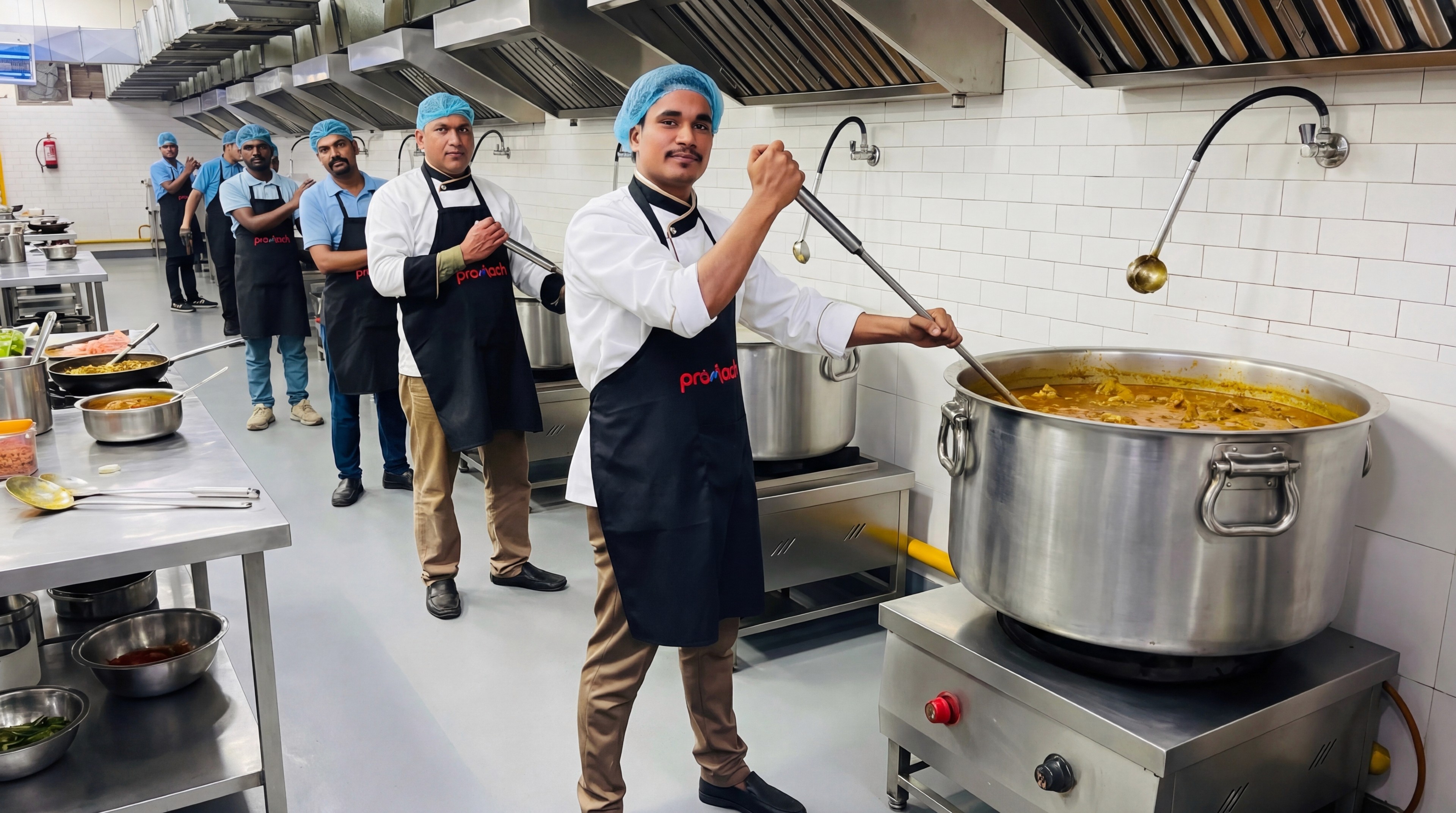
Our production line runs on Rational iCombi Pro combi ovens - the same German combi-oven technology used in Michelin-starred kitchens. The relevant word is process-controlled. A programme runs to a defined temperature curve, humidity level and time, and it runs identically at 6:30 am and 8:15 am. Batch fifty is the same food as batch one.

Two consequences worth understanding:

Consistency becomes engineering rather than luck. The dal your team eats in March tastes like the dal they ate in November. In a daily programme, that repeatability matters far more than any single spectacular meal.

Nutrients survive better. Controlled steam and temperature preserve more than prolonged open-flame boiling does. At 240 meals per employee per year, that difference compounds.

Breads are made in timed batches against the dispatch schedule rather than in one early lot - because a roti made at 6 am and eaten at 1:30 pm is a texture every employee recognises and nobody enjoys.

8:30 AM: quality control and sample retention

Before anything leaves, each batch is checked - taste, texture, temperature, seasoning against the standard recipe.

Samples from every batch are retained and refrigerated. If a question about any meal arises days later, the physical evidence exists. That single practice separates kitchens that can answer questions from kitchens that can only apologise.

9:00 AM: packing and route loading

Food moves into insulated, temperature-holding containers, sealed and labelled by site. Vehicles are loaded by route rather than by dish, so that the last site on a route is not the last thing to be considered.

9:30 AM onward: dispatch across NCR

This is the part that is genuinely difficult, and no amount of kitchen quality survives getting it wrong.

Our kitchen sits in Sector 63, Noida - a deliberate choice, roughly equidistant from central Delhi and Gurgaon. From there, routes run to Delhi, across Noida and Greater Noida, out to Gurgaon, and into Faridabad and Ghaziabad.

Routes are planned around NCR traffic patterns, not around map distance. The Gurgaon route in particular is engineered backwards from the delivery window rather than forwards from the kitchen. Temperature integrity is maintained through the journey, because a client in Cyber City is entitled to the same food as a client next door to our facility - and they will not accept "the traffic was bad" as a reason twice.

12:00 to 2:00 PM: service

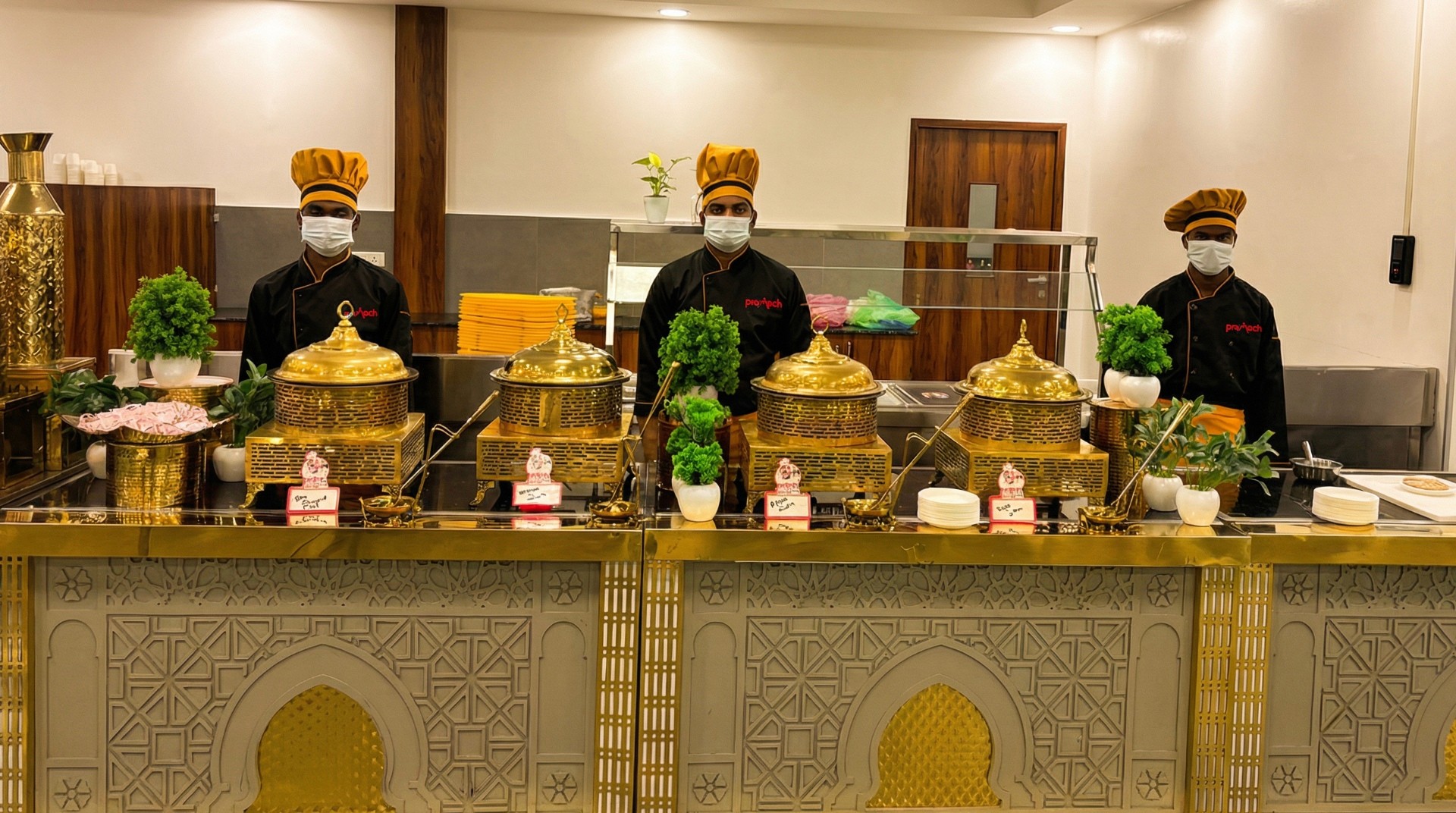
At client sites, food is held at temperature and served. Our staff at cafeteria and onsite locations handle counter service, replenishment and hygiene through the service window.

3:00 PM: the feedback loop

Waste is observed, feedback is collected, and consumption against forecast is recorded. This is where tomorrow's menu gets better. A dish that consistently comes back uneaten is a menu problem, and it's a problem you only find if someone is looking.

And then it starts again

By late afternoon, tomorrow's headcount is locking. The cycle has no gap.

Five things bulk catering has to solve that home cooking doesn't

1. Consistency is harder than quality. Anyone can cook one excellent meal. Producing the same excellent meal 250 working days in a row, across multiple sites, through staff changes and seasonal ingredient variation, is the actual problem. It is solved with standardised recipes, process-controlled equipment and documented specifications - not with talent alone.

2. Holding time has to be designed for. There are four to five hours between cooking and eating. A recipe that is perfect at the moment it leaves the pan and poor ninety minutes later is a failed recipe in this business, however good it tastes in a tasting. Dishes have to be built to survive the gap.

3. Cold chain and temperature discipline. Food safety in bulk is overwhelmingly a temperature story. Most things that go wrong in institutional catering go wrong because food spent time in a temperature range it shouldn't have.

4. Traceability. Every batch traceable to its ingredients, every ingredient traceable to its supplier, with records that survive an audit. This is what allows a problem to be isolated in hours instead of guessed at.

5. Redundancy. A vehicle will break down. A supplier will fail to deliver. A client will call at 9 am with sixty extra guests. Scale is what lets you absorb these without the client noticing - a second vehicle exists, a second supplier is approved, and the kitchen has the capacity to add sixty covers. A small operation has no slack. This is the one genuine advantage of volume, and it's the reason to care about it.

The food safety architecture, and why each part exists

Certifications are easy to list and harder to explain. Here is what ours actually do.

FSSAI licence is the legal baseline - the licence to operate at all.

HACCP is a system rather than a badge. It identifies the specific points in a process where contamination could occur and puts a control and a check at each one. It's the difference between "we're careful" and "here are the seven points where this could go wrong and here is what we monitor at each."

ISO 22000 wraps that into a management system, with documentation, internal audits and corrective-action procedures. It's what makes the discipline survive a change of personnel.

FoSTaC training puts certified food-safety knowledge at every level of the team, not only in management. FSSAI requires a trained Food Safety Supervisor for every 25 food handlers. Handling discipline on the floor is where safety is actually won or lost.

Ongoing audits, not one-time paperwork. A certificate issued four years ago proves something about four years ago. Certification maintained through regular audit proves something about now. Ours are current and available for client review - and we'd encourage you to ask any caterer for theirs with dates attached.

The people

Roughly seventy trained staff members, and the structure matters as much as the number: chefs and production teams on the line, quality control separate from production so that checking isn't done by the person being checked, route supervisors accountable for delivery windows, site staff at client locations, and a named account manager per client so that when something goes wrong on a Tuesday you speak to a person rather than a helpline.

Menu engineering, not menu writing

At 10,000 meals a day, the menu is a system.

A four-week minimum rotation, because repetition is what kills participation in a lunch programme faster than anything else.

Dietary variants built into the plan rather than handled as exceptions - Jain, vegan, low-oil, diabetic-friendly and high-protein options designed alongside the main menu.

Seasonal produce, which is simultaneously the better-tasting choice and the better-costed one.

The festival calendar planned in advance - Navratri, Shravan, Paryushan, Ekadashi. A caterer who is surprised by these every year isn't paying attention to the people eating the food.

Feedback that changes something. Consumption data and site feedback feed the next cycle. A menu that never changes in response to what people actually eat isn't being managed.

What goes wrong, and what we do about it

Any caterer who tells you nothing ever goes wrong is telling you they haven't operated at scale.

Traffic and weather. Routes are built with buffer, and dispatch sequencing is adjusted on bad days. When a delay is unavoidable, the client hears it from us before they hear it from their employees.

Supplier failure. Approved alternates exist for every significant ingredient. This is boring, and it's the reason a bad morning at one vendor doesn't become a bad lunch at eleven sites.

Sudden headcount changes. Capacity absorbs it. This is what the 20,000 sq ft facility is for.

Complaints. Retained samples, batch records and a named account manager mean a complaint can be investigated properly rather than met with a general apology. Most complaints have a specific, findable cause.

The number that actually matters

Ten thousand meals a day is a capacity figure. It tells you what a kitchen can do. It doesn't tell you whether anyone wants to keep eating the food.

The number we'd point to instead is 80% client retention, with several partnerships now past their tenth year. In corporate catering, contracts come up for review annually and switching costs are low. Clients who stay are making an active choice, repeatedly, with full knowledge of what the alternatives quote.

Scale is straightforward to claim. Renewal is difficult to fake.

Final thoughts

The answer to "how do you serve 10,000 meals a day" is not a secret and it isn't glamorous. It's a locked headcount the evening before, a rejection point at the gate at 4 am, a process-controlled cooking line that removes the variable of who's on shift, retained samples, temperature-held transport routed around NCR traffic, and a feedback loop that actually changes the menu.

It is, in short, the removal of improvisation from every step where improvisation could hurt someone - so that the only thing left to vary is whether the food is good. And that part still comes down to cooking it like it matters.

Come and see it.

The most useful thing you can do when evaluating any caterer is to walk through their kitchen. Promach Hospitality has been feeding corporate Delhi NCR for thirteen years, from a 20,000 sq ft HACCP-certified, ISO 22000-compliant, FSSAI-licensed central kitchen in Noida Sector 63, serving 50+ organisations across Delhi, Noida, Gurgaon, Greater Noida, Faridabad and Ghaziabad.

We'd rather show you the facility than describe it. Turn up unannounced if you'd prefer - it tells you more.

Tell us your location, headcount and timing, and we'll come back with a tailored proposal within 24 hours. Our minimum for daily corporate programmes is 30 meals a day, and we cater events from 50 guests upward.

Get a quote · Book a 15-minute call · +91-9953460631

Uncategory

Aug 24, 2026

The Missing ESG Metric in Your Office: Food Waste

Your sustainability report almost certainly counts kilowatt-hours. It counts litres of water. It probably counts reams of paper, kilograms of e-waste, and the number of single-use plastic items you eliminated from the pantry.

It very likely does not count the food scraped off plates in your cafeteria every afternoon.

That's not an oversight peculiar to your organisation. It's an industry-wide blind spot, and 2026 is the year it stopped being a harmless one. Two regulatory changes landed this year that pull cafeteria waste directly into both your compliance obligations and your ESG disclosures - and most HR, admin and facilities teams have not connected either of them to lunch.

The number is larger than it feels

Food waste is easy to underestimate because it leaves the building quietly, mixed in with everything else.

Globally, 1.05 billion tonnes of food was wasted in 2022 - roughly 19% of all food available to consumers, according to the UNEP Food Waste Index Report. Households account for about 60% of that. Food service accounts for 28%, or around 290 million tonnes a year. India is the second-largest food-wasting nation after China, at roughly 78 million tonnes annually.

But the environmental cost isn't really the food. It's what happens after.

Organic waste sent to landfill decomposes without oxygen and generates methane, a far more potent greenhouse gas than carbon dioxide over the short term. UNEP estimates that 8-10% of global greenhouse gas emissions are associated with food that is never eaten. For context, that is a larger share than global aviation.

So a cafeteria that quietly sends 60 kg of mixed organic waste to a landfill every working day is not running a housekeeping problem. It is running an unmeasured emissions line.

Two things changed in 2026

1. Your office may now legally be a Bulk Waste Generator

The Ministry of Environment, Forest and Climate Change notified the Solid Waste Management Rules, 2026 in January, superseding the 2016 framework. They came into full effect on 1 April 2026.

Three provisions matter for anyone running an office cafeteria:

Four-stream segregation is now mandatory. The old three-stream system has been replaced by wet, dry, sanitary and special care waste, applicable to households, institutions and commercial establishments alike.

The Bulk Waste Generator threshold is wider than most people assume. An entity qualifies as a BWG if it meets any one of three criteria: a floor area of 20,000 square metres or more, water consumption of 40,000 litres per day or more, or solid waste generation of 100 kg per day or more. The word doing the work there is "or".

Here is the part worth sitting with: an office of roughly 220 to 250 people with a running cafeteria generates about 100 kg of solid waste a day. That is not a large campus. That is a single floor in Cyber City or a mid-sized unit in Sector 62. Most organisations at that size have never weighed their waste - they've estimated it, or never thought about it at all.

EBWGR makes wet waste your responsibility, not the municipality's. Under Extended Bulk Waste Generator Responsibility, a BWG must process its wet waste on-site - through composting or bio-methanation - or obtain an EBWGR certificate covering off-site processing. Non-compliance attracts environmental compensation on a polluter-pays basis, levied by State Pollution Control Boards. Municipal corporations across NCR, including Gurugram, are running BWG registration portals and have issued advisories.

The practical translation: your cafeteria's organic waste is now a compliance item with a named owner, and that owner is you.

2. Waste is now an assured ESG metric, not a narrative one

Separately, SEBI's Business Responsibility and Sustainability Reporting framework has been tightening.

BRSR has applied to the top 1,000 listed companies by market capitalisation since FY 2022-23. What has changed is BRSR Core - the subset of indicators that require independent assessment or assurance rather than self-reporting. That assurance obligation has been phased in from the top 150 companies, and reaches the full top 1,000 in FY 2026-27 - the financial year currently running.

Of the nine BRSR Core attributes, four are environmental: greenhouse gas emissions, energy, water, and waste.

Assurance changes the nature of the disclosure. A narrative paragraph about sustainability commitments cannot be assured. A waste figure has to come from somewhere, with evidence behind it, and an assessor is entitled to ask where.

And if you're reading this from an unlisted company and concluding none of it applies: SEBI's value chain provisions pull suppliers into scope through their listed customers. Partners accounting for 2% or more of a listed entity's purchases or sales can be asked for exactly this data. A growing number of unlisted Indian companies are receiving waste, energy and emissions questionnaires from customers who are themselves under BRSR pressure.

Why nobody measures cafeteria food waste

If this is now both a compliance obligation and an assured disclosure, why is it still invisible in most organisations?

Four honest reasons.

It never appears on an invoice. You pay a per-plate rate. You pay it whether the plate is eaten or scraped into a bin. Because the waste has no line item, it has no owner in finance.

Responsibility is split three ways. The caterer produces the food, facilities manages the bins, housekeeping moves the waste. Each assumes one of the others is tracking it. Nobody is.

It leaves the building mixed. Once cafeteria waste goes into a common stream, the food component becomes unmeasurable by design.

And - this deserves saying plainly, from a caterer - the incentives point the wrong way. For a catering operation, running short is a visible, immediate failure. Twenty employees find an empty counter at 1:40 pm and your admin manager hears about it that afternoon. Over-producing by 15% is completely invisible. Nobody complains about food that existed.

So the rational behaviour for a caterer under a per-plate contract, in the absence of measurement, is to cook too much. That is not villainy. It is what the contract structure rewards. Which is precisely why measurement is the intervention that matters.

Three different problems wearing one name

"Food waste" is actually three separate problems with three different owners and three different fixes. Lumping them together is the main reason the issue never gets solved.

1. Kitchen and production waste. Trim, peel, spoilage, and over-production at the source. This sits with your caterer and is largely a procurement and prep-discipline question.

2. Unserved food. Food cooked and transported but never put on a plate - the trays still full at 2:15 pm. This is usually the largest single category and the most controllable, because it is almost entirely a forecasting problem.

3. Plate waste. Food served and not eaten. This is a portion-sizing and menu-quality signal, and it's the most useful diagnostic you have. Consistently high plate waste on one dish is unfiltered feedback that no employee survey will give you.

A programme that reduces category 2 by better forecasting will barely touch category 3. A programme that fixes portion sizes won't help category 2 at all. You need to know which one you have.

How to measure it, cheaply

You don't need a consultant or a system. You need a weighing scale, three labelled bins and one week.

  • Run a one-week weigh. Separate kitchen prep waste, unserved food, and plate scrapings. Weigh each at the end of every service.

  • Convert to grams per meal served. This is your baseline metric, and it's the one worth reporting, because it normalises for headcount and lets you compare month to month.

  • Track forecast accuracy alongside it. Record meals forecast versus meals actually served, daily. If you cook for 500 and 380 people turn up, you have lost 24% before anyone has eaten anything. In most offices this single variable explains more waste than everything else combined.

  • Log plate waste by dish, not in aggregate. Two weeks of this will tell you which three items to remove from the menu.

  • Repeat quarterly. A one-off audit gives you a number. A quarterly one gives you a trend, which is what an assurance provider actually wants to see.

What actually reduces it

In rough order of impact:

Fix the forecast first. This is the single largest lever and the cheapest. Use attendance data, integrate the leave calendar, account for holidays and long weekends, and build a simple pre-booking or meal-indent system. An organisation that knows on Monday how many people are eating on Tuesday can cut over-production dramatically without touching anything else.

Move from single-lot to batch production. A kitchen that cooks the entire day's volume in one pass at 8 am has committed to its forecast and cannot correct. A kitchen that cooks in waves against live counter data can. This is a capability question worth asking your caterer directly.

Right-size portions and offer a smaller option. Plate waste often reflects a portion built for the largest eater in the room. Offering a half-portion or a smaller roti count as a standard choice reduces waste without reducing anyone's satisfaction. Employees who want more can take more.

Reconsider the counter format. Fully self-service formats reliably generate more plate waste than served or part-served counters, because people serve optimistically. A served counter with the option to return for seconds usually lands better on both waste and satisfaction.

Cut the dishes people don't eat. Obvious, and almost nobody does it, because nobody is looking at waste dish by dish.

Redistribute safe surplus - carefully. FSSAI's Save Food Share Food initiative and the Indian Food Sharing Alliance provide a framework for surplus food redistribution. This is worth doing, but it belongs after prevention, not instead of it, and cooked vegetarian food carries genuine time and temperature constraints. Any redistribution arrangement needs a written protocol covering holding time, temperature and handover, agreed with your caterer. Done casually, it creates a food-safety liability rather than an ESG win.

Compost or bio-methanate what remains. Under EBWGR you will likely need to do this anyway. But be clear about what it is: composting is a disposal method, not a reduction method. It answers your compliance question. It does not reduce the food you bought and didn't eat.

The hierarchy, applied to your cafeteria

Prevent. Then redistribute. Then compost. Then landfill.

Most corporate food-waste initiatives start at step three, because composting is visible, photographable and easy to put in a report. Prevention is invisible - it shows up as an absence - which is exactly why it gets skipped.

Prevention is also the only step that saves money. Every kilogram of food you don't over-produce is a kilogram you didn't buy, didn't cook, didn't transport, didn't refrigerate and don't now have to process. It's the rare sustainability intervention where the environmental case and the commercial case are the same action.

Six questions for your catering partner

  1. Do you weigh food waste, split into kitchen, unserved and plate categories?

  2. What is your grams-of-waste-per-meal-served figure at our site?

  3. How do you forecast daily headcount, and what has your forecast accuracy been over the last quarter?

  4. Do you batch-cook against live demand, or produce in a single lot?

  5. What happens to safe surplus, and is there a written protocol?

  6. Will you provide monthly waste data in a format we can use in our BRSR or sustainability reporting?

The sixth question is the one that changes behaviour. A caterer who reports waste numbers monthly starts managing them, because the number becomes visible to someone other than themselves.

Final thoughts

Food waste is the ESG metric most likely to be sitting unmeasured in your building right now, and 2026 has made that expensive in two directions at once - a compliance obligation under the SWM Rules that most mid-sized offices haven't assessed themselves against, and an assured disclosure requirement reaching the top 1,000 listed companies this financial year.

It is also, unusually, a problem where doing the right thing costs less than not doing it. Nobody's cafeteria budget goes up when over-production goes down.

The starting point isn't a strategy or a vendor. It's a weighing scale and one week of attention.

At Promach Hospitality, we serve around 10,000 vegetarian meals a day across Delhi NCR, which means we see the forecasting problem at scale - and we would rather forecast accurately than cook to be safe. If you're building a food-waste baseline for your BRSR reporting, or assessing whether your site crosses the Bulk Waste Generator threshold, we're happy to run a measurement week with you and share the numbers, whether or not we're currently your caterer.

Thirteen years, a 20,000 sq ft HACCP-certified and ISO 22000-compliant central kitchen in Noida Sector 63, and clients across Delhi, Noida, Gurgaon, Greater Noida, Faridabad and Ghaziabad.

Get a quote · Book a 15-minute call · +91-9953460631

Uncategory

Aug 23, 2026

Your Employees Eat Office Lunch 20+ Times a Month. What Is Actually on Their Plate?

Do the arithmetic once and it changes how you think about the catering contract.

Twenty-two working days a month. Roughly 240 meals a year, allowing for leave and travel. For an employee who has been with you four years, that's close to a thousand meals your organisation chose on their behalf.

You made a nutrition decision for every person on your payroll. You may not have thought of it that way when you signed the contract - most admin and HR teams don't - but that is what a daily lunch programme is. And the question worth asking, honestly, is whether anyone in your organisation actually knows what is on that plate.

Not whether employees like it. Whether you know what's in it.

Why small compromises compound

A restaurant meal that is slightly worse than it should be is a bad evening. A corporate lunch that is slightly worse than it should be is a bad decade.

Say a caterer uses 5 ml more oil per portion than necessary to make the food glossier and more appealing on arrival. Nobody notices at a single sitting. Across 240 meals, that is roughly 1.2 litres of additional cooking oil per employee per year, entirely invisible on any invoice.

The same compounding applies in reverse, and this is the part worth holding onto: a genuinely well-built plate delivers its benefit 240 times too. Small improvements in a daily meal are among the highest-leverage things an admin function can do, precisely because of the repetition.

So it's worth knowing what you're repeating.

The plate, item by item

Here is what a standard vegetarian corporate thali is made of, and what to actually look at in each component.

1. The paneer - and this one is urgent

For most vegetarian corporate menus, paneer is the protein anchor. It is also, right now, the single most compromised ingredient in Indian institutional catering.

Analogue paneer is a non-dairy substitute built from vegetable fats - frequently palm oil - along with starch and emulsifiers. It looks like paneer, holds its shape in a gravy like paneer, and costs substantially less than paneer. What it does not do is deliver the protein and calcium that made you put paneer on the menu in the first place.

This is not a fringe concern. Between April 2025 and March 2026, the Maharashtra FDA tested 308 paneer and dairy analogue samples. Around 35% failed to meet prescribed standards - 79 classified as sub-standard, 30 declared unsafe. In April 2026, FSSAI's West Region issued a public notice stating plainly that selling a cheese analogue as "paneer" is a grave violation of the law, and directing food service establishments to train their procurement teams and chefs and to verify incoming raw materials. Maharashtra has since banned the manufacture and sale of analogue paneer outright, and the National Human Rights Commission has asked FSSAI and every state and union territory to account for how the product is being regulated.

Analogue paneer is not illegal in itself when it is correctly labelled and disclosed. Selling it as paneer is.

What this means for you: if paneer appears on your weekly menu two or three times, and if you have never asked your caterer to show you a dairy purchase invoice, you do not currently know what your employees are eating. Ask. A caterer buying real dairy paneer will produce the invoice without hesitation.

2. The oil

Two questions, both answerable in a sentence by any caterer operating properly.

Which oil? Mustard, groundnut, sunflower, rice bran and refined palm blends behave very differently and cost very differently. A caterer who cannot immediately name the oil they cook in is not managing their kitchen closely.

Is it ever reused? FSSAI has set a limit for Total Polar Compounds in cooking oil at 25%, beyond which the oil is not fit for use, and since July 2018 food business operators have been required to monitor oil quality during frying. Operators generating more than 50 litres of used cooking oil a day must dispose of it through authorised collectors and maintain records.

That last part is the useful bit for you: there is a paper trail. A compliant bulk kitchen can show you its used-cooking-oil disposal records. Ask to see them.

3. The dal

Dal is where a vegetarian plate quietly loses most of its protein, because dal is the easiest thing in the world to stretch.

The same ladle of dal can contain very different amounts of actual pulse. Thin it with water, hold the colour with turmeric, finish with a tadka that carries the aroma, and it looks and smells correct while delivering a fraction of the nutrition.

Ask for the specification in grams of dry pulse per portion, not millilitres of finished dal. Any caterer running a costed menu knows this number. If they don't have it, they aren't costing their menu - they're guessing, and guessing always drifts downward over the life of a contract.

4. The sabzi

Look at the ratio of vegetable to gravy. Gravy is cheap; vegetables are not. A dish that arrives as a large volume of well-seasoned gravy with a modest quantity of vegetable suspended in it is a costing decision, not a culinary one.

Also worth asking: seasonal or frozen? A menu that serves the same four vegetables in January and July is not tracking seasonality, which means it is neither at its best on taste nor at its best on cost.

5. The roti and the rice

Roti is where holding time shows first. A roti made at 9 am and eaten at 1:30 pm has a specific, recognisable texture, and every employee knows it even if they can't name it.

Ask what time the breads are made, and whether they are made in batches timed to dispatch or made in one lot at the start of the shift. The answer tells you a lot about how the kitchen is actually run.

6. The salt

Bulk cooking tends to over-salt, and there's a mechanical reason for it: food that will sit for hours before it's eaten tastes flat on arrival, and salt is the cheapest way to compensate. Add the fact that food is usually tasted hot in the kitchen and eaten warm at the desk, and the drift is upward almost by default.

Ask whether there is a salt specification per portion, and whether anyone checks it. Most contracts have never raised the question.

7. The accompaniments

Curd, salad, a piece of fruit, a lemon wedge, chutney. These are the first casualties whenever a caterer is squeezed on price, because they are the easiest items to shrink without triggering a complaint.

They are also disproportionately where the freshness, the fibre and the perceived generosity of a meal live. If your per-plate rate has been held flat for three years, look here first. This is almost certainly where the adjustment was made.

The protein problem in vegetarian catering

This deserves its own section, because it is the most common weakness in bulk vegetarian menus and the easiest to fix.

A vegetarian plate can deliver excellent protein. It just doesn't do it by accident. Built carelessly, a veg thali becomes a carbohydrate delivery system with a protein garnish: rice, roti, a potato-heavy sabzi, and a thin dal.

Where protein actually comes from on a vegetarian plate:

  • Dal and whole pulses - rajma, chana, lobia, and dals served thick rather than thinned

  • Real dairy paneer - and only real dairy paneer

  • Curd - a daily portion, not an occasional one

  • Soya and its preparations - inexpensive, high-protein, and widely accepted when cooked well

  • Sprouts and chana chaat - excellent in the salad slot, and cheaper than most alternatives

  • Combining grain with pulse in the same meal - the traditional dal-chawal or rajma-chawal pairing does this instinctively

The practical test is simple: look at your weekly menu and count how many days carry a substantial protein item. Not how many days have something protein-ish on the plate - how many days have a portion that would meaningfully register. In a lot of corporate menus the honest answer is two or three days out of five.

That is a fixable problem, and fixing it does not require a large increase in per-plate cost. It requires the menu to be designed around protein rather than around what looks full on a tray.

The gap between the kitchen and the plate

A good dish cooked at 8 am can still be bad food at 1:30 pm.

Between your caterer's kitchen and your employee's desk there are usually four to five hours, one loading, one road journey through city traffic, one unloading, and a holding period at your premises. Each stage is an opportunity for temperature to drift, texture to collapse and moisture to migrate.

What to ask:

  • What time is each dish cooked, and what time does it reach us?

  • How is temperature maintained in transit, and is it recorded?

  • What is the holding equipment at our end, and who checks it?

  • What is the maximum time between cooking and serving under your process?

Cooking method matters here more than most buyers realise. Process-controlled equipment - combi ovens and similar - produces consistent batches that survive holding far better than open-flame bulk cooking, which is why serious institutional kitchens invest in it. Ask what your food is cooked in.

Nine questions to ask your caterer this week

You do not need a food technologist to run this audit. You need a meeting and these nine questions.

  1. Is the paneer you serve us dairy paneer? Can you show me a purchase invoice?

  2. Which oil do you cook in, and is any oil reused? Can I see your used-cooking-oil disposal records?

  3. What is the specified quantity of dry pulse per portion of dal?

  4. What is the vegetable-to-gravy ratio specified for our sabzi?

  5. What time is our food cooked, and what time does it leave your kitchen?

  6. How is temperature maintained in transit, and do you log it?

  7. Can I see your current FSSAI licence, HACCP certification and ISO 22000 documentation, with dates?

  8. How many of your staff are FoSTaC-trained, and at what ratio to food handlers?

  9. Can I visit your kitchen this week, without scheduling it in advance?

The ninth question is the most informative one. Every answer above can be prepared. A kitchen cannot.

Don't just ask - check

Questions establish what a caterer claims. A few small habits establish what is actually happening.

  • Eat the meal, unannounced, on a random Tuesday. Not on a review day when the kitchen knows you're watching. Most admin heads have never eaten the standard employee plate without notice.
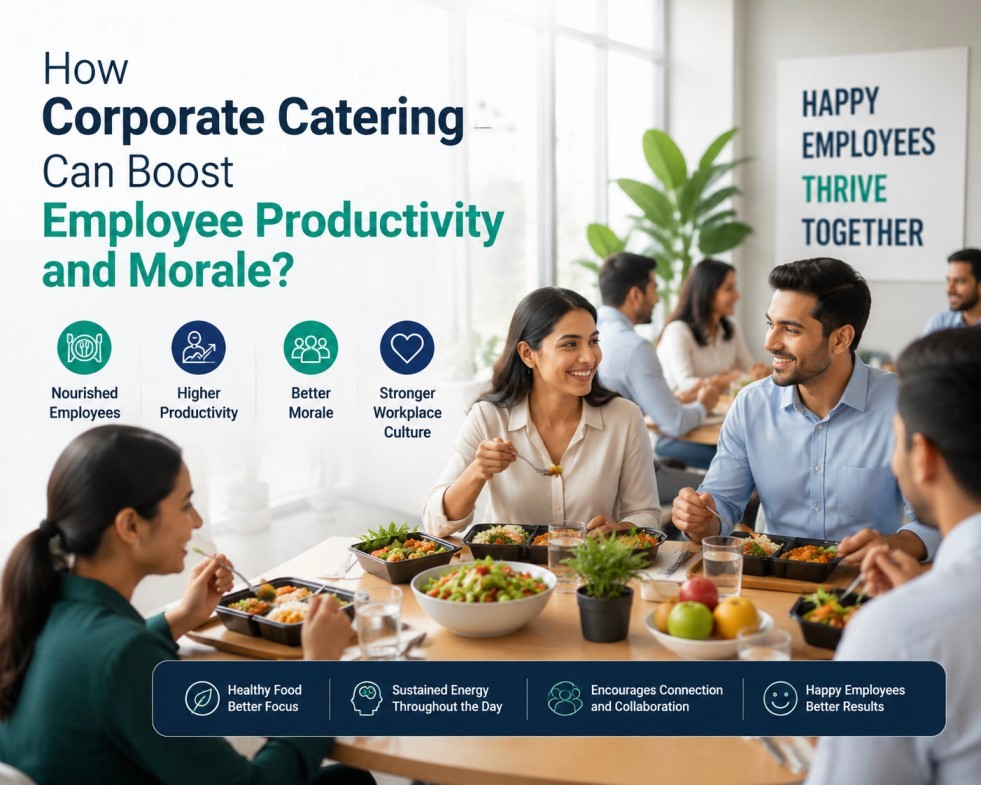
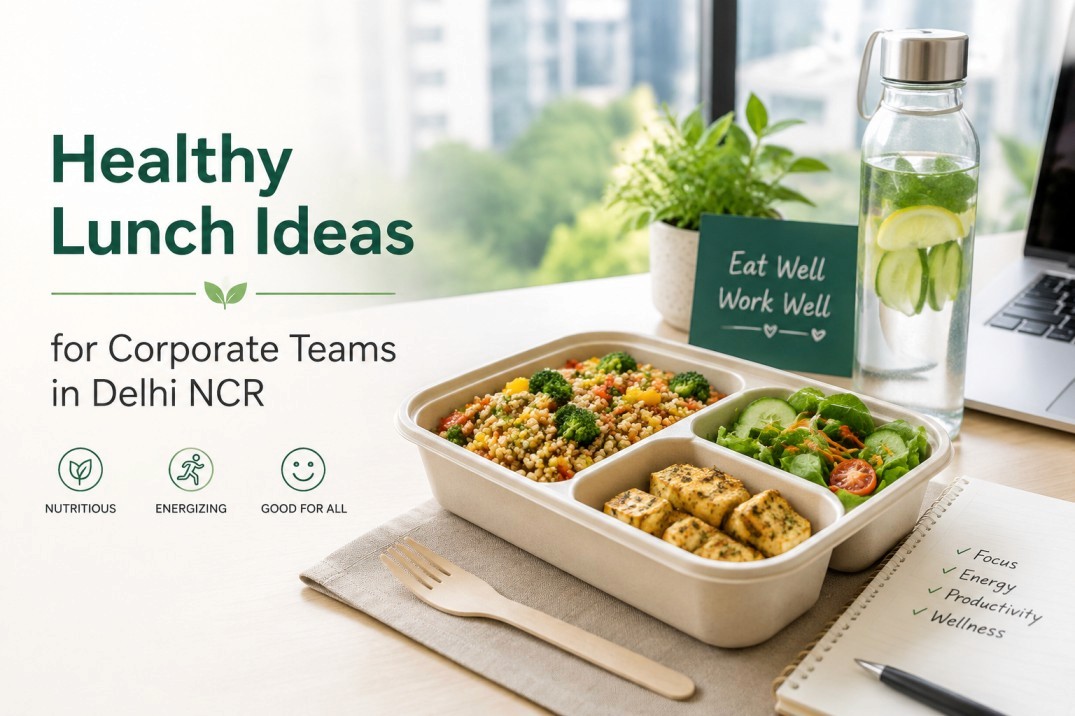
  • Weigh a portion once. A kitchen scale costs very little. Compare what arrives against what the contract specifies. Do this twice a year.

  • Visit the kitchen without an appointment. A caterer who welcomes this is telling you something real. One who needs three days' notice is telling you something too.

  • Ask employees better questions. "How's the food?" gets you a shrug. "Was the dal thick or thin this week?", "How often did you get curd?", "Did the roti arrive soft?" get you an actual audit.

  • Track plate waste by dish. Consistently high waste on one item is unfiltered feedback that no survey will give you.

What good actually looks like

A well-run corporate meal programme is not an exotic thing. It looks like this:

  • A menu rotation of at least four weeks, with seasonal vegetables

  • A protein item of real substance on most days, not most weeks

  • Real dairy in anything described as dairy, with invoices available on request

  • Fresh oil, with disposal records

  • Current FSSAI, HACCP and ISO 22000 certification, and trained staff at every level

  • A defined cooking-to-serving window, with temperature-controlled transport

  • Written per-portion specifications that someone actually checks

  • A caterer who says yes when you ask to walk through the kitchen

None of that is expensive relative to what it delivers. Most of it is simply a question of whether anyone ever asked.

Final thoughts

Your employees will eat somewhere between 200 and 250 meals from this contract in the next year. That is a substantial share of their working-week nutrition, decided by a procurement process most organisations review once and then renew on autopilot.

The point of this article isn't to make you suspicious of your caterer. It's to make the conversation specific. "Is the food good?" is a question nobody can answer usefully. "Is the paneer dairy paneer, and can I see the invoice?" is a question with one correct answer.

Ask the specific ones. A good caterer will be glad you did, because specific questions are the only way genuine quality becomes visible on an invoice.

At Promach Hospitality, we've spent thirteen years cooking for corporate Delhi NCR - around 10,000 vegetarian meals a day, from a 20,000 sq ft HACCP-certified, ISO 22000-compliant, FSSAI-licensed central kitchen in Noida Sector 63, with FoSTaC-trained staff at every level and temperature-controlled logistics across Delhi, Noida, Gurgaon, Greater Noida, Faridabad and Ghaziabad.

We'd encourage you to put all nine questions above to us, including the ninth one. Come and see the kitchen. Turn up unannounced if you'd prefer - our clients do, and that's rather the point.

If you're reviewing your meal programme, tell us your location, headcount and timing. We'll come back with a proposal, and a full specification sheet, within 24 hours.

Get a quote · Book a 15-minute call · +91-9953460631

Uncategory

Aug 22, 2026

Corporate Food Services: Complete Guide to Managing Employee Meals at Scale

Managing food for an office is easy when you are ordering lunch for ten people.

Managing hundreds or thousands of employee meals every day is an entirely different operation.

The food has to be fresh. Portions need to stay consistent. Lunch must arrive on time. Menus need enough variety for employees eating every day. Hygiene standards cannot fluctuate. And when employee strength changes, the catering operation needs to adapt without creating shortages or unnecessary food waste.

That is where professional corporate food services become important.

For HR, Admin, Procurement and Facility Management teams, choosing a corporate caterer is not simply about finding someone who can cook in bulk. It is about finding a partner capable of managing a critical everyday workplace operation reliably.

At Promach Hospitality, we serve 10,000+ meals every day across 50+ offices, giving us first-hand experience of what it takes to manage employee meals consistently at scale.

This guide explains what businesses should consider when selecting a corporate food service provider—and why operational capability matters just as much as the menu.

What Are Corporate Food Services?

Corporate food services are structured meal solutions designed specifically for workplaces.

Depending on the size and requirements of the company, they can include:

  • Daily office breakfast, lunch or dinner

  • Bulk vegetarian corporate meals

  • Employee meal programs

  • Managed office cafeterias

  • Packed employee meals

  • Corporate event catering

  • Industrial and workforce catering

  • On-site food services

  • Multi-location meal delivery

Unlike occasional catering, corporate food services usually operate every working day.

That changes everything.

A corporate caterer is expected to deliver similar quality today, tomorrow and hundreds of meals later.

For companies feeding large teams, consistency becomes the product.

Why Managing Employee Meals at Scale Is Challenging

Cooking 50 meals and cooking 5,000 meals are not simply different quantities of the same job.

At scale, every part of the process needs structure.

Consider a company with 1,000 employees.

If lunch is scheduled for 1:00 PM, thousands of individual actions need to happen correctly before that meal reaches employees:

Procurement → Storage → Preparation → Cooking → Portioning → Packing → Dispatch → Transportation → Service

A problem at any stage can affect the entire workplace meal experience.

That is why organisations should evaluate a caterer's systems and capacity, not just the food served during a tasting.

1. Start With the Caterer's Daily Meal Capacity

One of the first questions businesses should ask a potential corporate catering provider is:

“How many meals do you currently serve every day?”

Past experience at scale matters.

A caterer may be excellent at handling 100-person events but may not have the infrastructure, manpower or logistics required to serve 1,000 employees every working day.

When evaluating a corporate food service provider, look at:

  • Existing daily meal volume

  • Kitchen capacity

  • Cooking infrastructure

  • Trained manpower

  • Procurement capability

  • Packing capacity

  • Dispatch planning

  • Delivery infrastructure

  • Ability to manage volume fluctuations

Promach currently manages 10,000+ employee meals every day across 50+ offices.

That means bulk meal preparation is not an occasional requirement for us.

It is our everyday operation.

For companies looking to serve hundreds or thousands of employees, proven daily volume provides an important indication that the systems required for large-scale catering are already in place.

2. Consistency Matters More Than One Great Food Tasting

Almost every company conducts a food tasting before appointing a catering vendor.

It is important—but it should not be the only evaluation criterion.

The more important question is:

Can the caterer serve the same quality after 100 working days?

Corporate employees may eat food from the same caterer five or six days every week.

They quickly notice when:

  • Portions start getting smaller

  • Food quality changes

  • Recipes become inconsistent

  • Menus become repetitive

  • Delivery timings fluctuate

  • Ingredient quality drops

A professional bulk corporate catering operation therefore requires:

Standardised Recipes

Recipes and preparation methods should be defined so that food remains consistent even when produced in several batches.

Portion Control

Every employee should receive an appropriate and predictable quantity.

Defined Procurement

Ingredient quality should not depend on what happens to be available that morning.

Kitchen Supervision

Large production batches require monitoring before food reaches the workplace.

Feedback Systems

Employee feedback should eventually translate into menu and operational improvements.

For corporate catering, the goal is not to produce one impressive meal.

It is to produce thousands of consistently good meals, day after day.

3. Food Safety Should Be a Purchasing Criterion

When hundreds of employees eat from one kitchen, food safety becomes a business responsibility—not merely a kitchen responsibility.

HR, Admin, Procurement and Facility teams should understand how their catering partner handles food from receiving to serving.

Ask potential vendors about:

  • Ingredient receiving procedures

  • Raw material storage

  • Kitchen cleaning schedules

  • Personal hygiene requirements

  • Food-contact surface sanitisation

  • Pest-control systems

  • Cooking procedures

  • Food holding

  • Packaging practices

  • Transportation hygiene

  • Staff food-safety training

  • Quality checks and documentation

The most important question is not:

“Does the kitchen look clean today?”

It is:

“What systems keep the kitchen clean every day?”

Processes matter because high-volume food operations cannot depend entirely on individual judgement.

4. Vegetarian Corporate Catering Needs Better Menu Planning

For organisations looking for bulk vegetarian corporate catering, menu planning has a direct impact on employee satisfaction.

When employees eat office meals regularly, repeating similar combinations quickly creates menu fatigue.

A well-planned vegetarian corporate menu can rotate between:

  • Seasonal vegetables

  • Dal preparations

  • Rajma and chole

  • Paneer dishes

  • Regional Indian dishes

  • Rice preparations

  • Indian breads

  • South Indian meals

  • Raita and salads

  • Light meal options

  • Desserts

  • Festival-special menus

The challenge is finding the balance between:

Variety + Nutrition + Taste + Cost + Operational feasibility

A good catering partner should therefore be able to create a structured weekly or monthly menu rather than deciding meals at the last minute.

Before finalising a caterer, companies should request a sample menu cycle.

Do not evaluate only whether the dishes sound attractive.

Ask yourself:

Would our employees be happy eating from this menu every working day?

5. Delivery Timing Is Part of Food Quality

A good meal delivered too late is still a bad corporate catering experience.

Employee lunch timings are usually fixed.

If hundreds of employees break for lunch at 1 PM, food cannot arrive at 1:30 PM.

That is why large-scale office catering requires much more than cooking.

Production and dispatch have to work backwards from the employee's meal time.

For example:

1:00 PM Lunch


Food should already be ready for service.


Transportation time must be calculated.


Dispatch must happen accordingly.


Packing needs to finish before dispatch.


Cooking must therefore follow a planned production schedule.

For companies operating across several offices, the challenge becomes even greater.

Promach's experience serving 50+ offices every day means meal preparation and dispatch need to work as a coordinated system rather than as individual food orders.

At scale, logistics becomes part of hospitality.

6. The Caterer Should Be Able to Handle Changing Headcounts

Employee attendance rarely remains exactly the same.

There may be:

  • Work-from-home days

  • Training sessions

  • New employee joining

  • Department events

  • Client meetings

  • Seasonal workforce changes

  • Shift changes

  • Special office occasions

Corporate food service providers therefore need the ability to adapt to changing meal counts.

Businesses should discuss:

What is the cut-off time for changing meal quantities?

How are daily meal counts communicated?

How are sudden increases handled?

What happens to excess meals?

Can the vendor scale when employee strength increases significantly?

The larger the organisation, the more important this flexibility becomes.

7. Choose the Right Corporate Catering Model

Not every workplace needs the same type of food service.

The right model depends on employee count, infrastructure, location and operating schedule.

Daily Bulk Corporate Meals

Suitable for organisations that want freshly prepared meals delivered to their workplace every day.

This works well when the office already has a dining area but does not want to operate a kitchen.

Packed Employee Meals

Suitable for:

  • Training programs

  • Off-site teams

  • Distributed workplaces

  • Conferences

  • Field employees

  • Controlled individual distribution

Packed meals make portioning and distribution easier, particularly when employees are spread across different departments or locations.

Managed Corporate Cafeteria

Suitable for organisations that have a dedicated cafeteria and want the catering partner to manage food and service operations.

This can provide employees with a more complete workplace dining experience.

On-Site Catering

Suitable for:

  • Large corporate campuses

  • Factories

  • Industrial facilities

  • Multiple-shift operations

  • Large employee populations

The catering operation is managed directly at the company's premises.

Corporate Event Catering

Suitable for:

  • Town halls

  • Conferences

  • Employee celebrations

  • Annual meetings

  • Training programs

  • Corporate events

An experienced corporate caterer should be able to recommend the right service model after understanding your workplace rather than offering the same solution to every business.

What Should You Ask Before Hiring a Corporate Food Service Provider?

Before finalising your next corporate catering contract, HR, Admin and Procurement teams should ask these questions.

Capacity

How many meals do you currently prepare every day?

How many corporate offices do you serve regularly?

Can your operation comfortably handle our employee count?

Food Safety

What food-safety procedures do you follow?

How are your food handlers trained?

How are cleaning and sanitisation monitored?

What checks happen before food leaves the kitchen?

Menu

Can you create rotating vegetarian menus?

How often do menus change?

Can menus be customised to employee preferences?

How do you incorporate employee feedback?

Delivery

How do you plan daily dispatches?

How do you maintain consistency across multiple office locations?

What happens if there is an unexpected delay?

Scalability

What happens when our workforce increases?

Can you handle additional meal requirements at short notice?

Can you support multiple offices if we expand?

Commercials

What is included in the per-meal price?

Is transportation included?

Are service staff included?

Is packaging charged separately?

How do rates change with volume?

Clear answers to these questions will tell you much more about the vendor than simply comparing quotations.

Don't Select Corporate Catering Only on Price Per Meal

When organisations require hundreds or thousands of meals, even a small difference in the per-meal price can look significant.

But the lowest quotation is not always the lowest-cost solution.

Consider the administrative cost of:

  • Repeated employee complaints

  • Food shortages

  • Late deliveries

  • Poor-quality meals

  • Frequent escalations

  • Excessive wastage

  • Vendor follow-ups

  • Finding and onboarding another caterer

For corporate food services, organisations should evaluate:

Price + Food Quality + Hygiene + Reliability + Scalability

A dependable food program should reduce the amount of time HR and Admin teams spend solving meal-related problems.

The real value of a professional corporate caterer is not simply supplying lunch.

It is making sure lunch is one less thing your organisation has to worry about.

Why Companies Choose an Experienced Bulk Corporate Caterer

There is a major operational advantage to working with a provider already handling high daily meal volumes.

Scale creates experience.

When a catering organisation serves thousands of meals daily, it continuously deals with:

  • Bulk procurement

  • Menu forecasting

  • Batch preparation

  • Portion planning

  • Quality control

  • Dispatch schedules

  • Employee feedback

  • Changing headcounts

  • Multiple workplace locations

These systems become increasingly important as your organisation grows.

A corporate catering partner should not become uncomfortable when your requirement moves from 200 meals to 500 or from 500 to 1,000.

The infrastructure should be capable of growing with your workforce.

Promach Hospitality: 10,000+ Meals. 50+ Offices. Every Day.

Corporate catering is not an occasional service at Promach Hospitality.

It is what our teams manage every day.

Today, Promach serves:

10,000+ Meals Every Day

Large-scale production requires planning, trained teams, standardisation and strong operational control.

50+ Offices

Managing different workplaces means managing different meal timings, employee preferences and operating requirements simultaneously.

Bulk Vegetarian Corporate Catering

Our focus is creating meal programs suited to organisations that require reliable food service at scale.

Daily Corporate Food Services

Because serving a workplace once is easy.

Serving it consistently every working day is what builds trust.

For organisations evaluating their next corporate food service partner, these numbers matter because they represent more than capacity.

They represent daily execution.

Who Should Consider Promach Corporate Food Services?

Promach's corporate meal solutions can be suitable for:

  • Corporate offices

  • IT and technology companies

  • Business parks

  • BPOs and large office teams

  • Manufacturing organisations

  • Industrial facilities

  • Corporate campuses

  • Organisations operating multiple offices

  • Companies looking to replace an existing catering vendor

  • Businesses scaling their employee meal program

Whether your requirement is for a single office or multiple workplace locations, the first step should be understanding the employee count, service timings, menu expectations and operational requirements.

Looking for a Bulk Corporate Catering Partner?

If your organisation needs dependable daily employee meals, do not evaluate a catering company solely by what it promises during a presentation.

Look at what it already manages every day.

Promach Hospitality currently serves 10,000+ meals across 50+ offices every day.

That experience gives us an understanding of the systems, consistency and coordination required to manage corporate food at scale.

Whether you are exploring a new employee meal program, replacing an existing caterer, opening a new office or expanding to multiple locations, we can build a catering solution around your requirements.

Let's Plan Your Employee Meal Program

Tell us:

  • Your office location

  • Approximate number of employees

  • Meals required per day

  • Preferred meal timings

  • Type of service required

  • Any specific vegetarian menu requirements

Request a customised corporate catering proposal from Promach Hospitality.

Because feeding thousands of employees isn't just about cooking more food.

It's about building a system that delivers, every single day.

Frequently Asked Questions

What are corporate food services?

Corporate food services are professionally managed meal programs for offices, factories and other workplaces. They can include daily employee meals, bulk catering, packed food, cafeteria management, on-site catering and corporate event catering.

What should a company look for in a corporate caterer?

Companies should evaluate daily meal capacity, existing corporate experience, food-safety processes, menu planning, delivery capability, scalability, employee feedback systems and commercial transparency.

Can Promach handle bulk corporate catering requirements?

Yes. Promach currently serves 10,000+ meals every day across 50+ offices, making high-volume corporate food service part of its regular operations.

Does Promach provide vegetarian corporate catering?

Yes. Promach provides bulk vegetarian corporate meal solutions designed for regular workplace requirements.

Can corporate menus be customised?

Corporate meal programs can be planned according to employee count, service format, meal timings, menu preferences and workplace requirements.

Why is daily meal volume important when selecting a caterer?

A caterer's existing daily volume indicates whether its kitchen, staff, procurement, production and logistics systems have experience operating at scale. This becomes particularly important when hundreds or thousands of employees need to be served within fixed meal windows.

How can we request a corporate catering proposal?

Share your office location, employee headcount, approximate daily meal requirement, meal timings and preferred service format with Promach Hospitality to discuss a customised corporate catering solution.