Blog
/
Behind the Kitchen
Inside a 20,000 Square Foot Kitchen: A Day in the Life of Corporate Catering
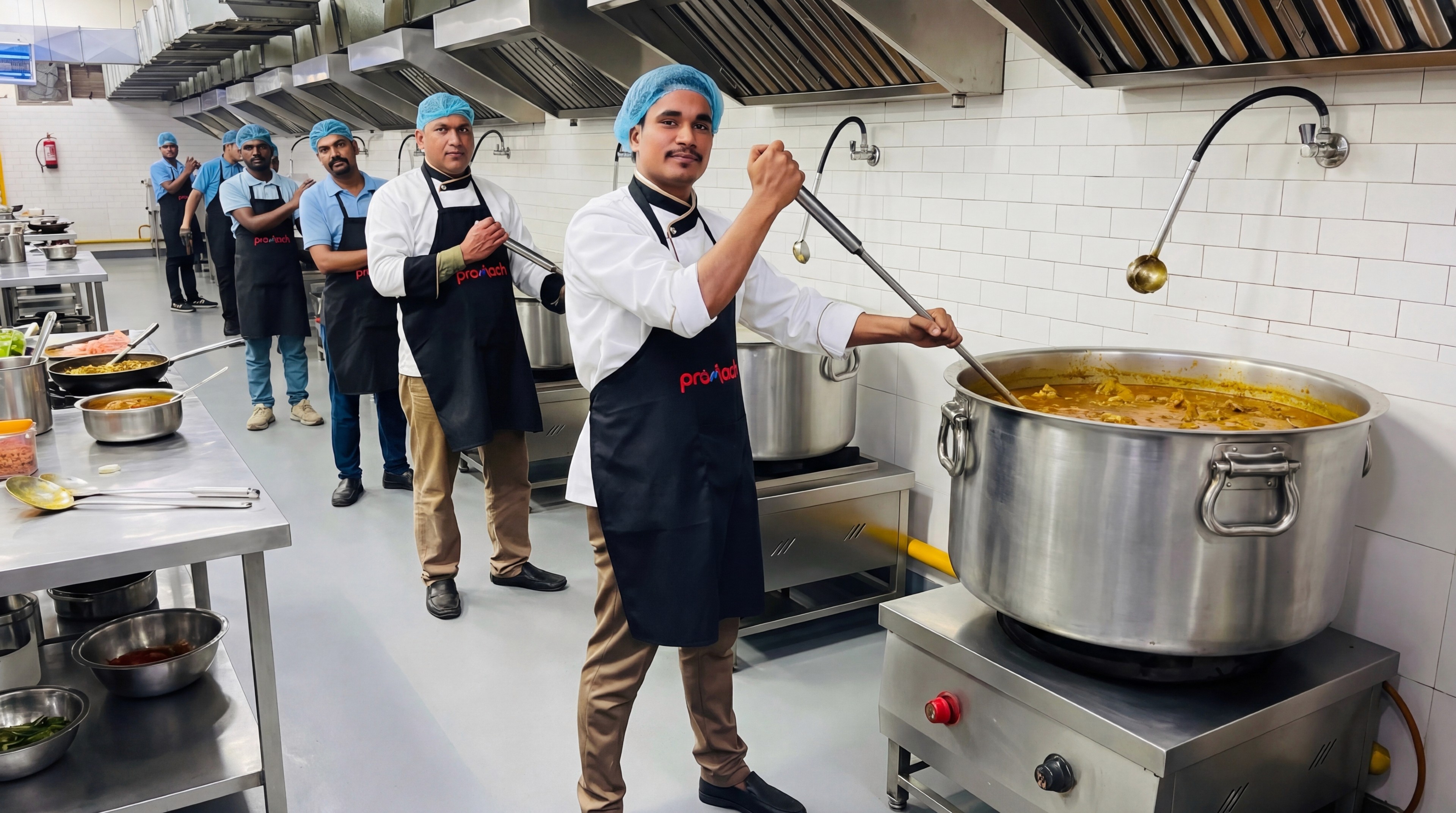
What does it actually take to feed 10,000 people a fresh, hot meal by 1 PM? We open the doors of our Noida central kitchen and walk you through a single day from start to finish.
Posted at
Posted on
Behind the Kitchen
A corporate lunch starts taking shape well before the first burner is
switched on. Someone has to confirm how many people are eating, turn the
menu into an ingredient order, plan the production batches and work
backwards from the office’s serving time.
Promach’s kitchen page describes its central facility in Sector-63, Noida as a
20,000-square-foot kitchen serving Delhi NCR. A facility’s size is
useful context, but the more revealing question is how ingredients,
people, equipment and records move through it.
This guide follows the workflow a corporate kitchen needs to manage.
It is also a practical checklist for an HR, admin or procurement team
planning a kitchen visit. Confirm the actual arrangements for your
proposed service during that visit.
Before production: agree what needs to leave the kitchen
Start with a service brief that separates daily attendance from meals
actually required. A 500-person office might need fewer meals on a
hybrid-working day, while visitors or a training programme can increase
demand at short notice.
For each location, the brief should record:
Confirmed meal quantity and the deadline for changes
Menu and agreed portion sizes
Separately requested dietary meals
Delivery address, receiving contact and unloading access
Required serving time and the length of the service window
Whether the food will be packed individually or served at counters
A useful kitchen tour question is: “Show us how a change in our meal
count would reach production and dispatch.” The answer should identify
who updates the order and who checks that the change has been carried
through.
Receiving: check ingredients before they join the stock
Receiving is an opportunity to stop unsuitable ingredients entering
production. Packaging condition, product identity, date information and
relevant temperatures need to be checked against the kitchen’s
acceptance criteria.
FSSAI’s catering inspection framework includes checks covering raw materials, storage
and the controls used during preparation and service. Ask to see a
recent receiving record and how the kitchen records a rejection or
discrepancy.
For paneer or other dairy ingredients, a menu name alone provides
little assurance. Supplier details, labelled product information and
batch traceability are more useful. An invoice helps establish what was
bought; it does not replace checks on what arrived.
Storage and preparation: follow the route through the building
During a visit, follow one ingredient from receiving to storage,
preparation and cooking. Then look at the route taken by used utensils,
waste and cleaning equipment. Where do those routes meet?
Pay particular attention to ready-to-eat foods such as salads. They
need protection from unwashed produce, dirty equipment and other sources
of contamination. Dietary requirements need their own discussion too: a
vegetarian dish may contain milk, wheat, nuts or other allergens.
Ask how a specially requested meal is identified from the recipe
stage through packing and handover. A label at the end of the process is
helpful only when it accurately reflects the ingredients and handling
controls behind it.
Cooking: check the process behind the equipment
A large oven or cooking vessel can improve capacity, but equipment
names do not demonstrate that every batch meets its specification. Ask
how staff choose the cooking programme, check the result and respond
when a reading falls outside the approved limit.
The kitchen should be able to explain which checks belong to each preparation and who signs off the batch. FSSAI’s hygiene requirements place food-safety management and appropriate hygiene practices at the centre of catering operations.
For buyers, a particularly useful question is: “What would stop this
batch from being dispatched?” A clear answer is more informative than a
general promise that quality is always checked.
Packing and dispatch: organise by destination and serving time
Once food is cooked, the service plan still has to survive
portioning, packing, loading, travel and unloading. Ask who checks the
quantity, menu, dietary labels and destination before each consignment
leaves.
Packaging deserves a separate conversation. The container must suit
the food and its intended temperature. If employees may reheat a packed
meal, obtain clear instructions about which container can be used. Avoid
assuming that a container suitable for delivery is also suitable for a
microwave.
Review the proposed route for your office, including the receiving
process. A delivery that reaches the gate on time can still miss lunch
if security approval, lift access or the unloading area has not been
arranged.
At the office: make the handover explicit
Agree who receives the food, records any required checks, reports a
discrepancy and manages holding during service. For a cafeteria, clarify
responsibility for equipment, replenishment, serving utensils and the
end of the service window.
The most useful trial includes the actual route and serving
arrangement. Taste and texture at a kitchen tasting can differ from the
employee experience after transport and holding. Assess the meal under
the agreed, safely controlled service conditions.
After lunch: use the evidence to improve tomorrow
Keep three quantities separate: meals ordered, meals served and food
left over. Add a short record of delivery timing, complaints and dishes
with unusually high waste.
A weekly review can then answer practical questions. Was the forecast
too high? Did one department miss the service window? Was a dish
unpopular, or was its portion too large? Each problem needs a different
adjustment.
Staff supervision matters throughout this cycle. FSSAI states that centrally or state-licensed food businesses should have at least one
trained and certified Food Safety Supervisor for every 25 food handlers
or part thereof at their premises. Ask how the team’s training and
supervision are organised for the shift that would prepare your
meals.
What to take away from a kitchen visit
Leave with a clear service plan, relevant licence details, agreed
dietary arrangements and the evidence needed to evaluate the proposed
operation. Any certification presented should identify its issuing body,
covered premises, scope and current status.
To discuss your office’s headcount, serving time and delivery requirements, contact Promach to arrange a kitchen visit. Bring the questions above and review the workflow your own meal programme would follow.


