Blog
/
Behind the Kitchen
World Food Day 2026: Practical Innovation in Institutional Kitchens
World Food Day 2026 focuses on innovation. See what meaningful innovation looks like inside a large institutional kitchen serving thousands daily.

Posted at
Posted on
Behind the Kitchen
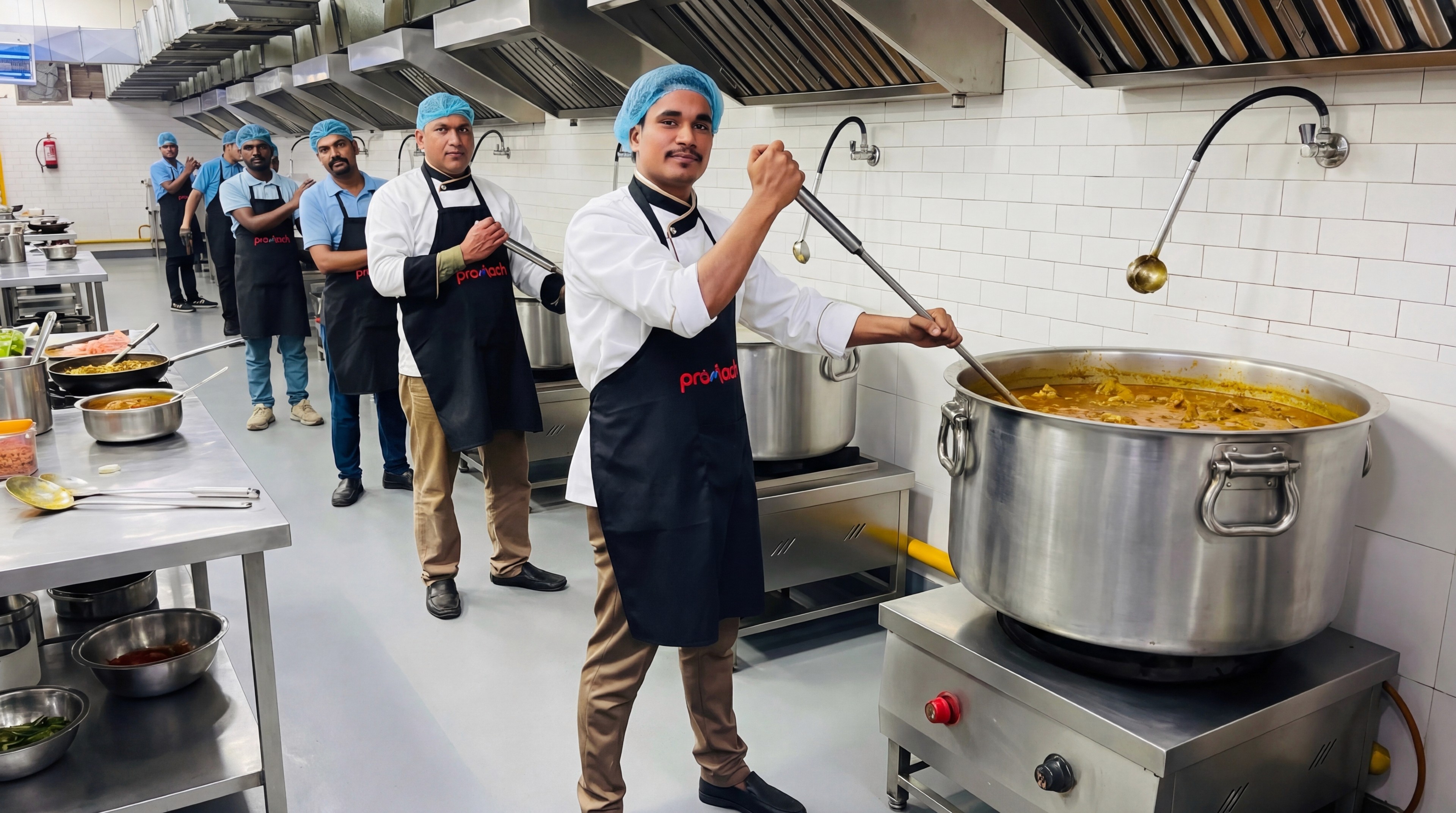
Illustrative image; not a photograph of a verified Promach facility or client event.
Ahead of World Food Day on October 16, 2026, institutional kitchens can use the occasion to review practical improvements in everyday operations.
For 2026, the Food and Agriculture Organization of the United Nations has chosen the theme "Innovate today. Nourish tomorrow."
The theme is particularly relevant to institutional catering.
When a kitchen produces thousands of meals every day, even a small improvement in procurement, production, energy use, waste management or logistics can create a meaningful impact at scale.
For Promach Hospitality, which states that it serves around 10,000 fresh meals daily across Delhi NCR, innovation is most useful when it improves everyday operations rather than simply adding more technology.
Innovation Is Not Always a Robot in the Kitchen
When people hear "food innovation," they often imagine automation, artificial intelligence or futuristic equipment.
Those technologies have a role, but institutional-kitchen innovation can be much simpler.
It may mean:
Better production planning
Improved demand forecasting
Smarter menu rotation
Reduced food waste
Better cold-chain monitoring
More efficient equipment
Digital quality records
Stronger ingredient traceability
Better training systems
At large volumes, small process improvements multiply quickly.
1. Better Demand Forecasting
One of the biggest challenges in institutional catering is predicting how many people will actually eat.
Overproduction creates waste.
Underproduction creates complaints.
Historical consumption data, attendance patterns, weekday trends and event calendars can all improve forecasting.
Even modest improvements in prediction can reduce unnecessary production across thousands of daily meals.
2. Menu Engineering With Data
A good institutional menu should not be designed only by asking, "What should we cook tomorrow?"
Large caterers can track:
Most popular dishes
Plate waste
Seasonal preferences
Repeated complaints
Cost movement
Dietary requirements
This information can create menus that balance nutrition, satisfaction, cost and operational efficiency.
Promach's Corporate Catering service focuses on rotating menus and different dietary requirements across workplace programs.
3. Smarter Procurement
Ingredient procurement influences cost, safety and sustainability.
Innovation can include:
Approved-supplier systems
Digital procurement records
Seasonal ingredient planning
Standardised specifications
Better inventory visibility
Good procurement is one of the foundations of safe bulk food production.
4. Technology for Food-Safety Monitoring
Paper checklists are useful, but digital monitoring can improve visibility.
Examples include:
Temperature logs
Cleaning records
Batch tracking
Corrective-action records
Supplier documentation
Audit dashboards
The goal is not technology for its own sake.
The goal is to identify problems early.
5. Equipment That Improves Consistency
Cooking for 10,000 people cannot depend entirely on individual judgement.
Large-scale equipment can help kitchens standardise cooking cycles, reduce manual variation and improve productivity.
Consistency becomes especially important when multiple batches of the same dish must taste and perform similarly.
6. Designing Food Waste Out of the Process
FAO's 2026 message connects innovation with more resilient and sustainable agrifood systems.
Institutional kitchens can contribute by measuring where waste occurs.
Waste may come from:
Overproduction
Excessive portions
Poor menu acceptance
Trimming
Storage losses
Spoilage
Incorrect forecasting
What gets measured can be improved.
7. Building Better Delivery Systems
For central kitchens, cooking is only half the job.
Meals must reach offices, campuses and other facilities safely and on time.
Route planning, insulated transportation, staggered dispatch and production scheduling can improve meal quality without changing the recipe.
Promach also operates Packed Food Services for circumstances where individually packed meals are more practical.
8. Investing in People
Technology cannot replace a poorly trained team.
Innovation also means building systems that help people perform better.
This includes:
Standard operating procedures
Role-based training
Supervisory checklists
Food-safety refreshers
Clear accountability
Feedback loops
From Innovation to Everyday Impact
World Food Day is a useful reminder that the future of food will not be shaped only by global policy or laboratory breakthroughs.
It will also be shaped inside everyday kitchens.
In a kitchen serving thousands, better planning can mean less waste. Better procurement can mean safer food. Better data can mean more accurate production. Better equipment can mean greater consistency.
That is what practical innovation looks like.
Businesses, universities and institutions looking to improve high-volume meal programs can explore Promach's full catering services, managed cafeteria solutions or contact the team.
FAQs
What is the World Food Day 2026 theme?
The official FAO theme for World Food Day 2026 is "Innovate today. Nourish tomorrow." World Food Day is observed on October 16.
How can institutional kitchens become more sustainable?
They can improve forecasting, control food waste, optimise menus, strengthen inventory management, use efficient equipment and improve logistics.
Does innovation always require expensive technology?
No. Standardisation, better training, improved data collection and smarter kitchen processes can create substantial improvements without major technology investment.