Blog
/
Festive & Office Catering
Office Diwali Party Menu for 50–500 Guests
A practical way to compose a festive office meal, with a sample menu and planning prompts for groups of 50 to 500.
Posted at
Posted on
Festive & Office Catering
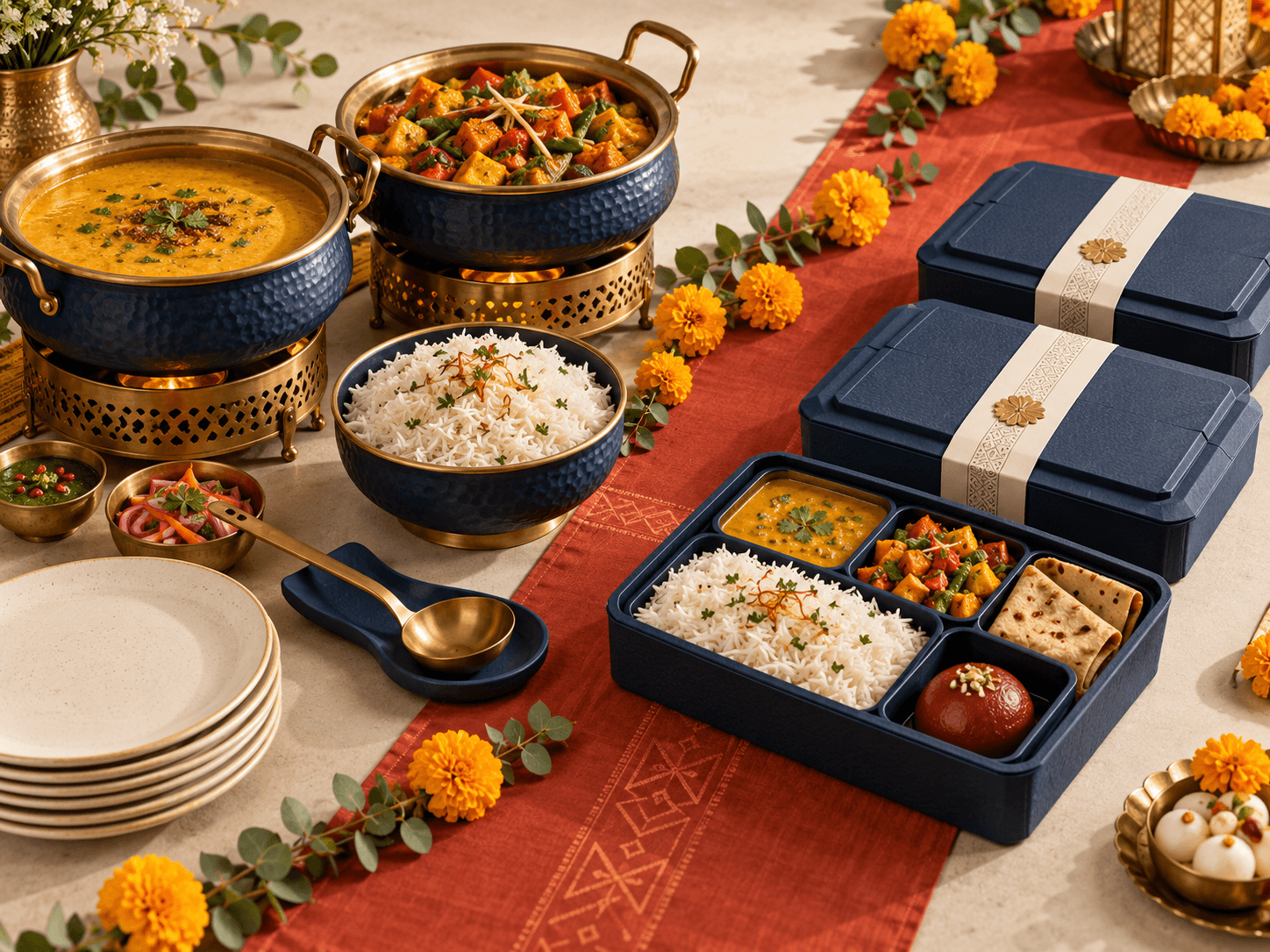
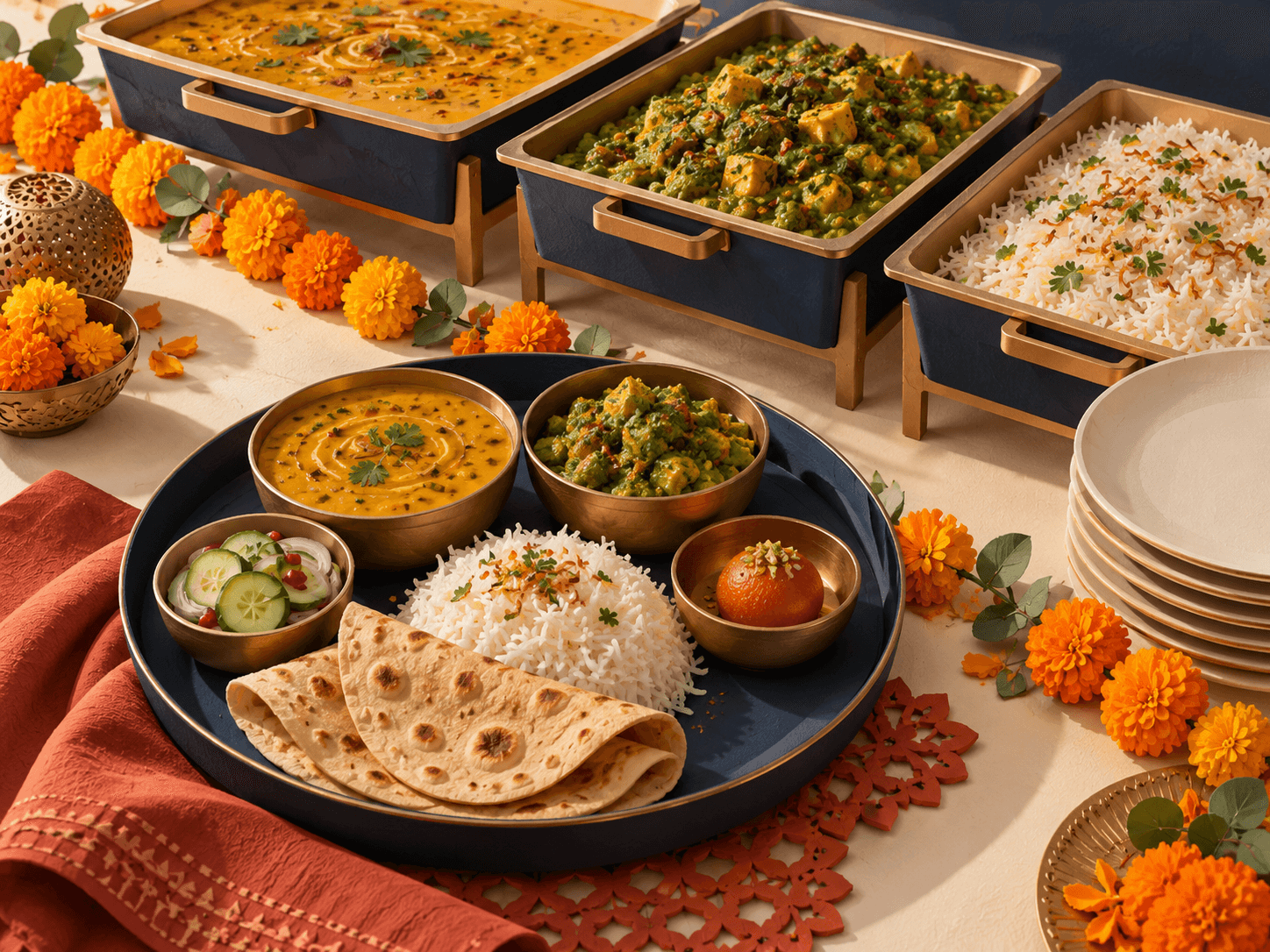
AI illustration for editorial use; not a photograph of a Promach facility, team or client event.
A Diwali menu can grow surprisingly long in a planning meeting. Someone asks for chaat, another team wants a regional favourite, and a second dessert appears because it feels festive. Soon the office has fifteen dishes and no clear idea of what lunch is meant to be.
Start with the meal people will actually eat. For an office Diwali party of 50 to 500 guests, a useful menu has a clear centre, enough choice for the team and a few details that make the occasion feel different from a regular workday. Guest count changes quantities and execution. It does not automatically require more dishes.
The examples below are planning ideas to discuss with a caterer, rather than a confirmed Promach menu or a statement of event capacity.
First, decide what the food needs to replace
Is this the day's lunch, an evening meal or a snack break before people head home? A substantial snack spread can still leave employees hungry if they were expecting dinner.
Write one sentence before collecting dish suggestions:
“Our Diwali celebration replaces lunch, with a complete meal served after the team programme.”
Then add the meal time, expected attendance and any food already being served. If there is a separate sweets distribution, the dessert course can be smaller or simpler. If the event begins just after lunch, a full second meal may be unnecessary.
Build a menu around roles, not a dish count
Give each part of the menu a job:
A welcome bite gives arriving guests something easy to enjoy
A main dish provides the festive centre of the meal
A dal or bean dish adds another substantial choice
A vegetable dish provides a different texture and flavour
Rice and bread make the mains easy to build a meal around
An accompaniment adds freshness or contrast
A dessert gives the meal a clear finish
This structure makes duplication easier to spot. Two creamy mains, a rich dal and a creamy accompaniment may give plenty of choice on paper while making the plate feel repetitive. Ask for a mix of dry and gravy-based dishes, mild and more pronounced flavours, and familiar and occasion-specific elements.
A sample office Diwali lunch menu
Here is a compact starting point for discussion:
Welcome bite: hara bhara kebab with a separately served chutney
Festive main: paneer tikka masala
Second substantial dish: dal tadka
Vegetable: a seasonal dry vegetable preparation
Staples: jeera rice and an agreed bread selection
Accompaniment: raita or a prepared salad suited to the service arrangements
Dessert: gulab jamun or another agreed festive sweet
Drinks: drinking water, with an optional welcome beverage
These examples use familiar dishes so that the structure is easy to follow. Confirm ingredients, recipes and suitability with the caterer. Dish names alone do not establish allergen content or whether a preparation meets a particular dietary requirement.
For a shorter evening gathering, discuss a different structure: two contrasting savoury snacks, one substantial item, a sweet and a beverage. Tell employees that it is a snacks event so expectations match the food.
How to adapt the menu as attendance grows
For 50–100 guests
Use the smaller group to learn preferences. A short RSVP question can identify a regional favourite or a dish people would genuinely look forward to. Choose one such addition and keep the rest of the meal coherent.
Avoid turning every suggestion into an extra course. If you add a substantial chaat, discuss whether a starter should come off the menu.
For 100–250 guests
Check the menu against teams rather than individual requests. Are there different work schedules, regional preferences or dietary needs that would make one standard plate unsuitable?
Agree the core menu first, then identify the exceptions that need a separate preparation. Give those meals a clear collection plan rather than expecting employees to negotiate changes at the counter.
For 250–500 guests
Keep choices easy to understand. Ask the caterer which dishes will retain their intended texture through the agreed delivery and serving sequence. A crisp item assembled at the last moment needs different arrangements from a dal.
Request a dish-by-dish quantity plan for the final headcount. Include the expected take-up of optional items. Ordering a full serving of every extra for every guest can produce a very different meal from the one people actually intend to eat.
These bands are planning prompts. The venue, event duration and caterer's confirmed arrangements matter more than a universal headcount rule.
Make the tasting answer useful questions
If a tasting is available, taste the proposed meal as a combination. Ask how each dish will be transported, held and finished before it reaches employees. FSSAI's catering-sector guidance treats packing, storage and transportation as parts of food-safety management, so these belong in the menu discussion too.
Check seasoning, portion size, how the breads will be replenished and whether the dessert portion suits the rest of the meal. Record any agreed recipe changes in the final menu.
Send a menu brief people can approve
Your final brief should state the meal occasion, guest count, dishes, portion assumptions, dietary requests, beverage provision and who can approve substitutions. Keep the approved version in one place.
Use Promach's event catering overview when defining the staffed-service requirements for your menu enquiry.
Planning an office Diwali menu in Noida or Delhi NCR? Share your date, headcount and meal brief with Promach to discuss menu options and the arrangements available for your event.