Blog
/
Industry Insights
Planning Corporate Events? Here’s Your Catering Checklist
Catering is far more than a line item on an event budget—it is a strategic lever that shapes how attendees experience a corporate gathering. A well-executed menu builds rapport during networking breaks, sustains…
Posted at
Posted on
Industry Insights
Catering is far more than a line item on an event budget—it is a strategic lever that shapes how attendees experience a corporate gathering. A well-executed menu builds rapport during networking breaks, sustains energy through long conference sessions, and reinforces the host company’s reputation for attention to detail. Conversely, a poorly planned meal can undercut weeks of preparation and leave a lasting negative impression on clients, partners, and employees alike.
This checklist walks you through every decision point, from the earliest scoping questions to post-event sustainability practices. Whether you are organising a 30-person leadership retreat or a 500-seat annual conference, following these steps will help you streamline the catering process and ensure nothing falls through the cracks.
Essential Steps in Planning Corporate Event Catering
1. Define Your Event Catering Needs
The nature of the event dictates every catering choice that follows. A half-day sales conference demands quick, high-energy meal service with grab-and-go snacks that keep the audience alert and on schedule. A formal gala dinner, on the other hand, requires plated courses, coordinated with speeches and entertainment, where each dish becomes part of the evening’s narrative.
Start by listing the event’s objectives, then map those objectives to catering decisions. For instance, a team-building afternoon calls for casual, interactive food stations that encourage people to move and mingle, while a board presentation warrants a private sit-down lunch that conveys professionalism. Aligning the food format with the event’s goals prevents a mismatch that can confuse attendees and dilute your intended message.
2. Estimate Attendees Accurately
Overestimating leads to food waste and budget overruns; underestimating risks running short and disappointing guests. Use RSVP data as a baseline, then apply a practical buffer. For internal company events where attendance is semi-mandatory, plan for 90–95 percent of invitees. For open-invitation industry mixers, expect 60–70 percent turnout.
A useful rule of thumb: request a final headcount 72 hours before the event and negotiate with your caterer for a 10 percent flexibility window. This protects you against last-minute changes without committing to an outsized order. Also factor in the time of day—breakfast events tend to see higher no-show rates than luncheons or evening receptions.
3. Menu Selection
Your menu should match the formality, duration, and pace of the event. Here is a practical starting point for three common corporate event formats:
Formal sit-down meals: Three-course menus with a starter, main, and dessert work best for award ceremonies, client dinners, and executive retreats.
Finger foods and canapés: Ideal for networking receptions and product launches where guests stand and circulate. Aim for 8–12 pieces per person for a two-hour cocktail event.
Casual buffets or boxed lunches: Suited for training days, hackathons, and team-building workshops where speed and simplicity are priorities.
Dietary inclusivity is non-negotiable. At minimum, ensure vegetarian, vegan, gluten-free, and common allergen-free options are available. Send a dietary preference survey along with the event invitation to capture individual needs—this shows care and prevents day-of scrambling.
4. Catering Service Style
The service format affects everything from guest flow to staffing requirements. Buffets let attendees self-select and move at their own pace, but they require space for long tables and can create bottlenecks. Plated service offers a controlled, elegant experience but demands more staff and precise kitchen timing. Family-style service, where platters are shared at each table, encourages conversation and works well for team dinners. Food stations—themed counters such as a live pasta bar or a regional taco stand—create interactive moments and distribute foot traffic across the venue.
Choose the style that best fits your event’s atmosphere, timeline, and venue layout. If the schedule is tight and the group is large, a buffet with multiple serving lines reduces wait times. If the event is intimate and client-facing, plated service signals refinement.
5. Logistics and Timing
Map your catering timeline against the event agenda. Identify exact windows for food setup, service, and clearance so that meal transitions do not interrupt keynote speakers or panel discussions. A common best practice is to build a 15-minute buffer on either side of scheduled meal breaks—this accounts for sessions running over and gives the catering crew time to stage or strike.
Coordinate delivery schedules with the venue’s loading dock hours and elevator access. For events in high-rise offices or convention centres, factor in at least 30 extra minutes for vertical transport of food and equipment.
6. Venue Considerations
Not every venue is catering-friendly. Before signing a contract, verify kitchen access, the number and placement of electrical outlets for warming trays, refrigeration capacity, and whether there is dedicated space for a prep area. If the venue lacks a full kitchen, you will need a caterer experienced with off-site preparation and insulated transport.
Also assess the floor plan for guest flow. Placing food stations near entrances creates congestion; positioning them deeper in the space draws attendees through the room and improves mingling.
7. Catering Equipment and Staffing
A detailed equipment checklist prevents day-of surprises. Common essentials include chafing dishes, serving trays, tongs, carving stations, beverage dispensers, linens, and waste bins. Confirm who supplies each item—some venues provide basics, while others require the caterer to bring everything.
Staffing ratios vary by service style. For plated service, plan roughly one server per 15–20 guests. Buffets require fewer front-of-house staff but more back-of-house support to keep dishes replenished. Ensure at least one dedicated coordinator to liaise between your team and the catering crew throughout the event.
8. Beverages and Drinks
Hydration stations with infused water, sparkling options, and fresh juices should be accessible throughout the event, not only during meal breaks. For events with an alcohol component, consider a curated selection rather than a full open bar—offering two signature cocktails, a wine pairing, and a craft mocktail keeps the experience memorable while controlling costs.
Position drink stations away from food lines to distribute traffic and reduce wait times. Always stock a generous non-alcoholic selection; many professionals prefer tea, speciality coffee, or alcohol-free cocktails during business functions.
9. Budgeting for Catering
Catering typically accounts for 30–40 percent of a corporate event’s total spend. Start by establishing a per-head budget range, then allocate within tiers: premium options for VIP tables or client-facing dinners, standard options for general attendees, and economical choices for large-scale internal meetings.
Build in a contingency line of 5–10 percent for unexpected additions such as last-minute dietary requests or equipment rentals. Request itemised quotes from caterers so you can compare ingredient costs, staffing fees, and service charges separately—this transparency makes it easier to negotiate and identify areas where you can save without sacrificing quality.
10. Sustainability
Sustainable catering has moved from a nice-to-have to a baseline expectation. Use compostable or reusable serviceware, source ingredients from local suppliers to reduce transport emissions, and work with your caterer to donate surplus food to community organisations rather than sending it to landfill.
Set portion-control targets based on your confirmed headcount and track actual waste after the event. This data becomes invaluable for refining future orders and demonstrating your company’s commitment to environmental responsibility—a message that resonates strongly with employees, clients, and stakeholders.
Unique Tips for Catering a Corporate Event
Personalising the Menu
Go beyond generic menus by aligning the food with your company’s identity or the event’s theme. Brand-coloured desserts, menu cards that tell the story behind each dish, or a regional speciality that reflects the company’s heritage can turn a meal into a talking point. If your event has a specific theme—such as innovation or sustainability—carry it through the catering with creative plating, locally sourced tasting menus, or zero-waste cooking demonstrations.
The Role of Technology in Event Catering
Digital tools can dramatically reduce manual coordination. Use RSVP platforms that capture dietary preferences at registration, deploy QR-code menus so guests can preview what is being served, and leverage ordering apps for events with multiple concurrent meal options. Real-time delivery tracking lets your team monitor the caterer’s arrival, and digital feedback forms sent immediately after the event capture impressions while the experience is fresh.
Handling Unexpected Situations
Even the best-laid plans encounter surprises. Build a contingency playbook that covers late deliveries (identify a nearby backup vendor), food shortages (keep a reserve of high-quality ready-to-serve items such as cheese and fruit platters), and equipment failures (arrange for spare chafing dishes and portable burners). Designate a single point of contact who has authority to make on-the-spot decisions, and brief the catering team on escalation procedures before the event begins.
Catering Service Comparison Table
The table below compares four common service styles across key planning dimensions to help you choose the right fit for your event.
Service Style | Cost Level | Guest Capacity | Best For | Key Consideration |
Buffet | Moderate | 50–500+ | Conferences, training days, casual mixers | Requires multiple serving lines for groups above 100 |
Plated Service | High | 20–200 | Gala dinners, client events, award ceremonies | Higher staffing ratio needed (1 server per 15–20 guests) |
Family-Style | Moderate–High | 15–100 | Team retreats, leadership dinners, intimate gatherings | Promotes conversation; less control over portion sizes |
Food Stations | Moderate–High | 40–300 | Product launches, networking events, themed galas | Distributes foot traffic; needs more floor space |
Event Catering Checklist: Top 10 Planning Essentials
Use this quick-reference checklist to ensure every critical area is covered before your event day.
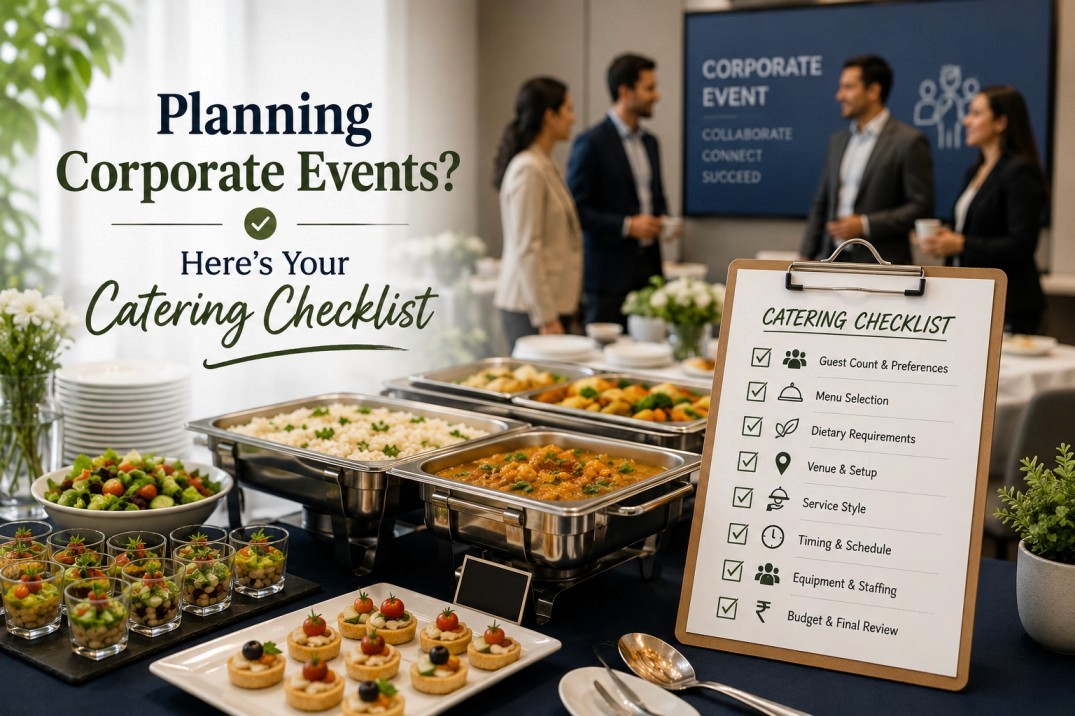
✅ Corporate Catering Checklist |
Define the event type, objectives, and how catering supports them |
Confirm attendee count with a 10% flexibility buffer |
Select a menu that matches event formality and dietary needs |
Choose the right service style (buffet, plated, stations, family) |
Build a detailed logistics timeline aligned with the event agenda |
Audit the venue for kitchen access, power, and serving space |
Secure equipment and confirm staffing ratios with the caterer |
Plan beverage stations with both alcoholic and non-alcoholic options |
Set a per-head budget with a 5–10% contingency reserve |
Implement sustainability measures: local sourcing, waste tracking, composting |
Frequently Asked Questions
How far in advance should I book a catering service for a corporate event?
For large-scale events (200+ attendees), book your caterer at least 8–12 weeks in advance. Smaller meetings or lunches can often be arranged 2–4 weeks out, but peak seasons—such as the end-of-year holiday period and annual general meeting windows—fill up quickly. Early booking also gives you more negotiating leverage on pricing and menu customisation.
What are some cost-saving tips for corporate event catering?
Opt for seasonal ingredients, which are typically less expensive and taste better. Choose a buffet or food-station format over plated service to reduce staffing costs. Negotiate package deals that bundle food, beverages, and equipment rental. Finally, use accurate headcount data to avoid over-ordering—this single step can cut waste-related costs by 15–20 percent.
How do I ensure the food aligns with the event’s theme?
Start by briefing your caterer on the event’s purpose, colour palette, and any branding guidelines. Ask for themed menu suggestions, such as regional cuisines that tie into a product launch market or farm-to-table options for a sustainability summit. Small touches—like branded napkins, menu cards with event messaging, or desserts in company colours—create a cohesive experience without drastically increasing the budget.
What are the best catering options for events with dietary restrictions?
Partner with a caterer experienced in allergen management. Include a dietary preference question in your event registration form. Clearly label every dish with ingredients and common allergens. Ensure that vegan, gluten-free, halal, and kosher options are not afterthoughts—they should be equally appealing and prominently placed alongside standard offerings.


