Blog
/
Festive & Office Catering
Buffet vs Packed Festive Meals for Offices
Choose a festive meal format that fits the time employees have to collect food, sit together and enjoy the occasion.
Posted at
Posted on
Festive & Office Catering
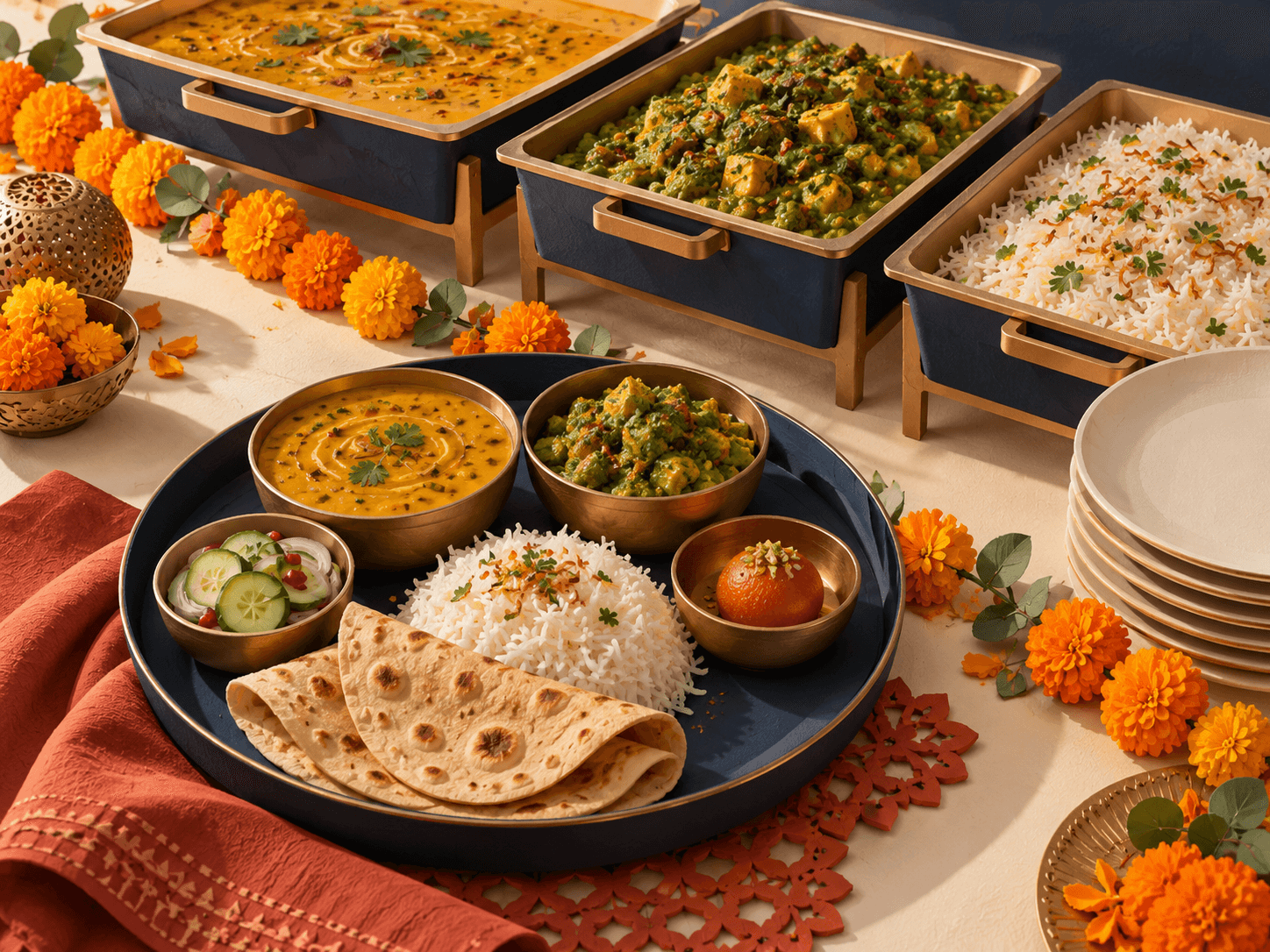
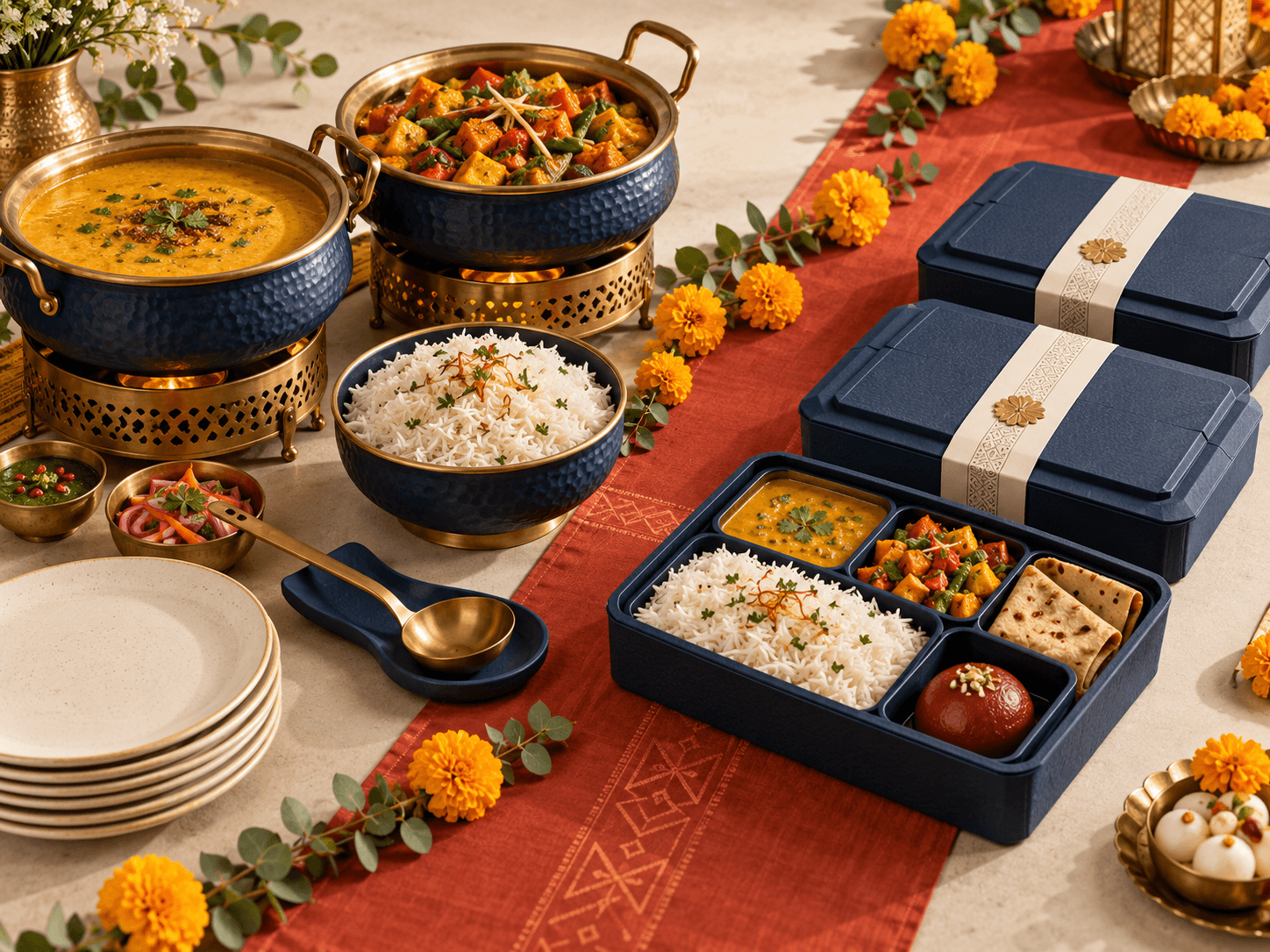
AI illustration for editorial use; not a photograph of a Promach facility, team or client event.
Your office Diwali celebration has a fixed slot in the calendar. The food format needs to fit inside it, including the time people spend collecting a meal, finding somewhere to sit and returning to work.
A buffet gives guests room to choose their dishes and portions. Packed meals make individual allocation easier. Either can support a warm, sociable celebration when the timing, layout and meal are planned together.
For a one-off festive event, choose the format by walking through an employee's experience from arrival to the last bite.
Start with the moment everyone will eat
Ask whether most employees can stop work at the same time. A shared meal after a Diwali programme is a different brief from food collected during staggered support-team breaks.
Put four times on the event plan:
When the food can enter the building
When setup or sorting must be finished
When employees can start collecting food
When the last group must finish eating
That final time is easy to overlook. If a break lasts 30 minutes, a 20-minute queue leaves very little time for lunch.
When a buffet is worth considering
A buffet is a useful starting point when there is a common meal window, enough room for serving and dining, and staff to keep the counter running.
Guests can choose which dishes to take and adjust portions to their appetite. The food can become a natural part of the gathering, with people returning for a preferred dish or finishing with dessert.
The layout needs to support that experience. Check:
Where the queue begins and whether it blocks a doorway
Whether people can reach drinking water without joining the food queue
How used plates leave the dining area
Where replenishment trays will move without crossing the main queue
Whether everyone can reach the serving area comfortably
Ask the caterer to explain the proposed counter arrangement and staffing for your meal window. A long buffet table does not, by itself, tell you how quickly people will be served. A popular dish, bread station or slow-to-assemble item may determine the pace.
When packed festive meals make sense
Packed meals are worth considering when employees collect food in groups, the office has limited counter space, or a controlled allocation is important.
A meal box still needs a distribution plan. Decide where cartons are received, how different meal types are identified and who hands them out. Keeping everything at reception can simply move the queue to another part of the office.
Before choosing the menu, ask to see the proposed packaging or a sample packed meal. Check whether:
Compartments suit the dishes and portion sizes
Sauces, accompaniments and sweets need separate containers
The meal can be opened and eaten comfortably at the available tables
Required cutlery and napkins are included
Meal variants are clearly identifiable
Packaging is suitable for the food and its intended temperature
FSSAI's revised catering inspection checklist includes food-grade packaging and transport-temperature controls. A sealed lid does not remove the need for an agreed delivery, holding and eating window.
Packed food can be eaten together. If the celebration is meant to bring colleagues into the same room, reserve shared seating and give everyone time to stay.
Test the collection rate before choosing
Use a simple planning calculation:
People collecting food ÷ minutes available for collection = required average collections per minute.
For illustration, 180 employees collecting meals within 15 minutes requires an average of 12 collections per minute. This is a target to test, not a claimed service capacity.
For a buffet, ask how the proposed serving points can meet it, including replenishment. For packed meals, check the complete handout process: finding the right meal, any attendance check, collecting cutlery and moving away from the table.
Use a short walk-through with the office team and caterer. If the proposed arrangement is too slow, consider more collection points, staggered groups or a longer window. Do not count eating time as spare queuing time.
Compare the whole setup and cleanup
Neither format is automatically the cheaper or lower-waste choice for every event.
A buffet proposal may include staff, equipment and reusable serviceware. Packed meals may involve packaging, sorting and additional bins. Compare the actual inclusions and the work your facilities team will need to do.
If reusable plates are proposed, confirm collection and washing arrangements. If single-use packaging is proposed, confirm how it will be collected after the meal. Keep exits and shared work areas clear whichever format you choose.
A mixed format can solve a specific problem
Some offices can host a shared buffet for the main celebration while arranging individual meals for employees who must cover essential work. This can work if both groups are included in the plan from the start.
Agree a comparable meal, a separate count and a clear collection time for the second group. Ask the caterer to confirm preparation and holding arrangements for each window. Food left after the first service should not become the default plan for colleagues eating later.
Make the decision in one sentence
A useful decision statement sounds like this:
“We are choosing packed meals because teams have staggered breaks, with two collection points and shared seating during each window.”
Or:
“We are choosing a buffet because the team has a common lunch break and the venue can support the agreed serving layout.”
You can review Promach's event catering and packed food services as starting points for the two formats, then ask what can be supported at your venue.
For a Diwali event in Noida or Delhi NCR, share your meal window, headcount and venue details with Promach. Ask which format can be supported for your event and request the setup, staffing and handover details in the proposal.