Blog
/
Festive & Office Catering
Jain, Vegan and Allergen-Aware Festive Catering: An Office Planning Guide
A practical dietary brief for office festive lunches, covering Jain and vegan requirements, allergen questions, menu checks and meal handover.

Posted at
Posted on
Festive & Office Catering
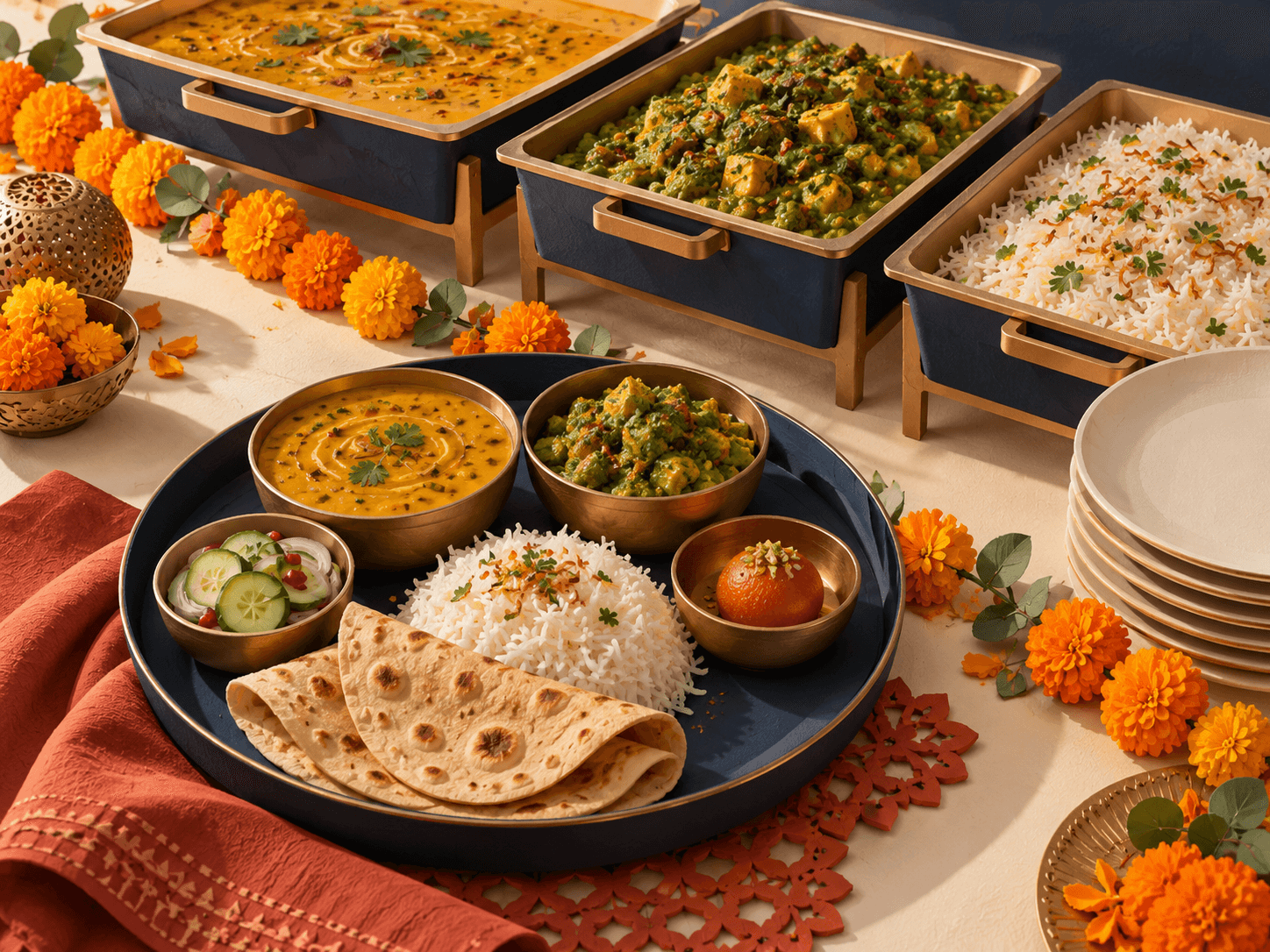
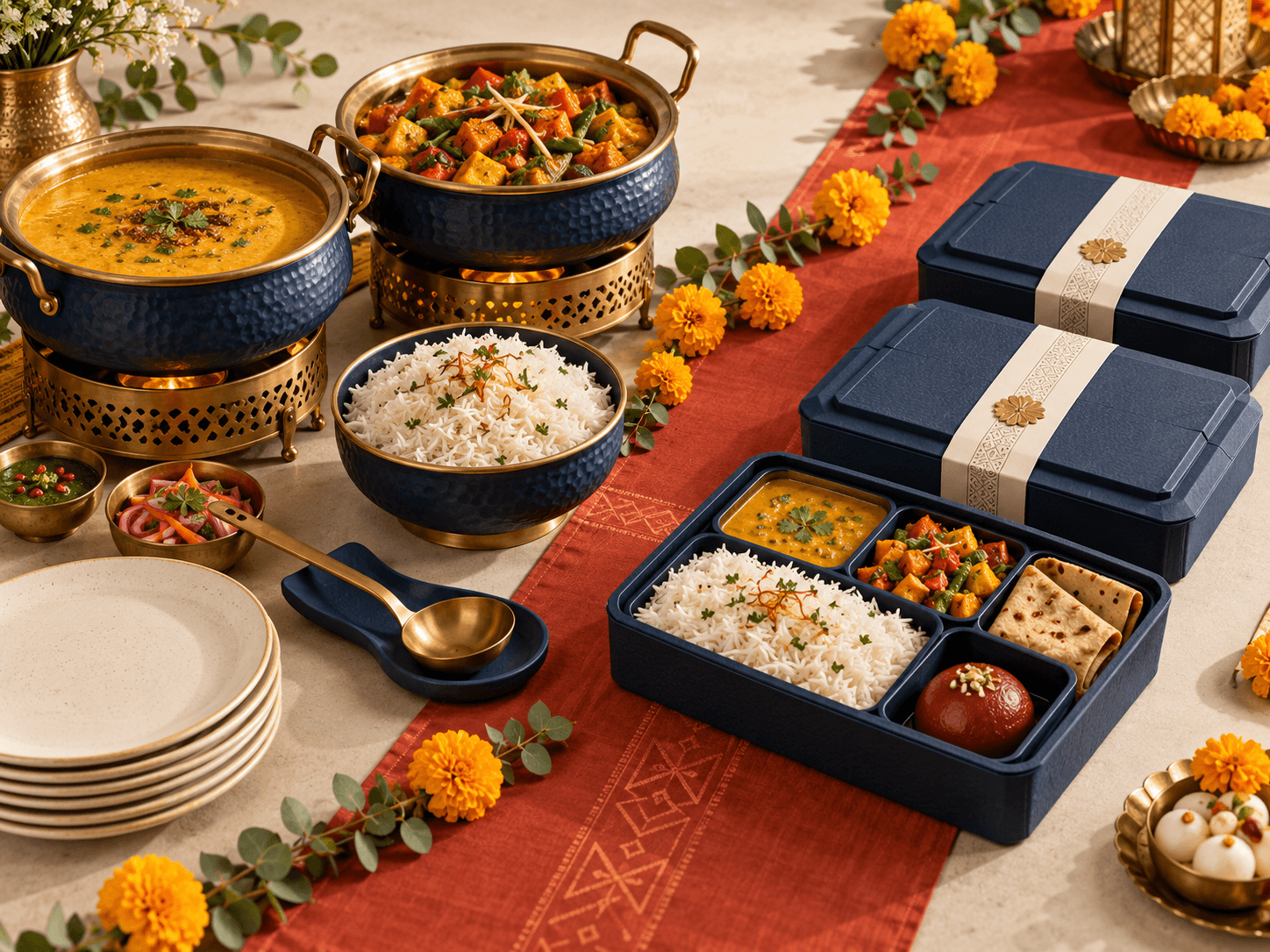
AI illustration for editorial use; not a photograph of a Promach facility, team or client event.
A Diwali lunch can have plenty of choice and still leave someone without a meal they can eat. The problem often starts with a vague booking note: “a few special meals required.” By service day, nobody knows which ingredients were excluded, where the meals are kept or who can answer questions.
For HR and admin teams arranging festive catering in Noida or Delhi NCR, the useful starting point is a written dietary brief. It should carry each requirement from the employee's request through menu approval, preparation and handover.
Collect requirements without making employees explain them publicly
Add a private dietary-response field to the lunch RSVP. Ask what needs to be excluded and whether the employee needs a direct conversation with the catering contact. Give a deadline that leaves time for that conversation before the menu is confirmed.
Keep names and personal details out of the general event spreadsheet. Share only what the relevant catering and admin contacts need to arrange the meal. A meal code can connect an individual order to its recipient without putting their health information on a buffet card.
Avoid a single “special diet” checkbox. Jain requirements, vegan preferences and food allergies need different questions, and one person may have more than one requirement.
Turn broad labels into an exact food brief
For a Jain meal, ask the employee to specify the ingredients and preparation conditions they observe. Do not assume “no onion and garlic” answers every question. Check root vegetables and any further restrictions they identify, then have the caterer confirm the complete recipe.
For a vegan meal, work through the ingredients beyond the main dish. Check ghee in dal, butter on breads, milk or cream in gravies, curd in accompaniments and dairy ingredients in sweets. Ask about stocks, dressings and finishing ingredients as well. A vegetable dish's name does not tell you its whole recipe.
For an allergy-related request, record the exact allergen as stated by the employee and pass the question to the caterer's responsible food-safety contact. Do not translate it into a general dietary label or decide that a small amount will be acceptable.
FSSAI's food-label guidance emphasises checking ingredient lists and notes that small quantities of some allergens can cause severe reactions. Ingredient information belongs in the planning conversation before anyone chooses a meal.
Review a complete meal, including the easy-to-miss extras
Ask for one written description covering the main, accompaniment, bread or rice, dessert and beverage. A suitable main course is not enough if the only bread or sweet is unsuitable.
Use a dish-by-dish review with the caterer:
What is in the base recipe, including prepared pastes and mixes?
Which garnishes, oils, sauces and toppings are added at the end?
Are supplier ingredient labels available for bought-in components?
Is any ingredient likely to be substituted?
Who must approve a change before that meal is prepared?
For example, a dal-and-rice meal might look straightforward, but its suitability still depends on the tempering, cooking fat and accompaniments. Treat menu examples as questions to verify, never as automatically suitable dishes.
Ask how the requirement survives preparation and service
An ingredient list and a handling plan answer different questions. Ask how the meal will be prepared, packed, transported and served, including any shared equipment or utensils.
FSSAI's Advanced Catering training material discusses identifying allergenic ingredients, separation during storage and production controls to reduce cross-contact. Use those topics to ask practical questions, rather than treating a label as a safety guarantee.
For an allergy-related request, ask the caterer to explain what it can and cannot control. “Allergen-aware” describes an approach to planning; it does not mean a kitchen, buffet or meal is allergen-free. If the required controls cannot be established, discuss a separate arrangement with the employee before the event. HR should not make medical suitability decisions on their behalf.
Make the handover easy to understand
Agree where separately arranged meals will be held and who will hand them over. A labelled pack at a staffed collection point may be easier to manage than an employee searching a crowded counter, but the caterer must confirm the appropriate handling for that meal.
Before opening service, check the meal codes against the final list and confirm that labels match the actual food. Keep a knowledgeable catering contact available for ingredient questions. Servers should refer uncertain questions to that person rather than guess.
Keep serving utensils with their assigned dishes. Position labels so guests can read them before reaching for food. If a dish changes, update its information before service resumes.
What should HR send with the catering enquiry?
Send the event date, office location, service window, expected attendance and a count of dietary requests. Describe ingredient exclusions without attaching unnecessary employee medical information. Ask for a written response identifying the proposed meals, preparation limitations and handover method.
Then confirm the agreed arrangement privately with each affected employee. This closes the gap between what they requested and what the catering team understood.
Review the event catering service overview alongside your dietary brief, then ask the team to confirm the specific preparation and handover arrangements.
For an office festive lunch in Noida or Delhi NCR, contact Promach Hospitality with your event brief and dietary requirements. Ask which arrangements can be supported for your date and venue before finalising the menu.