Blog
/
Workplace Wellness
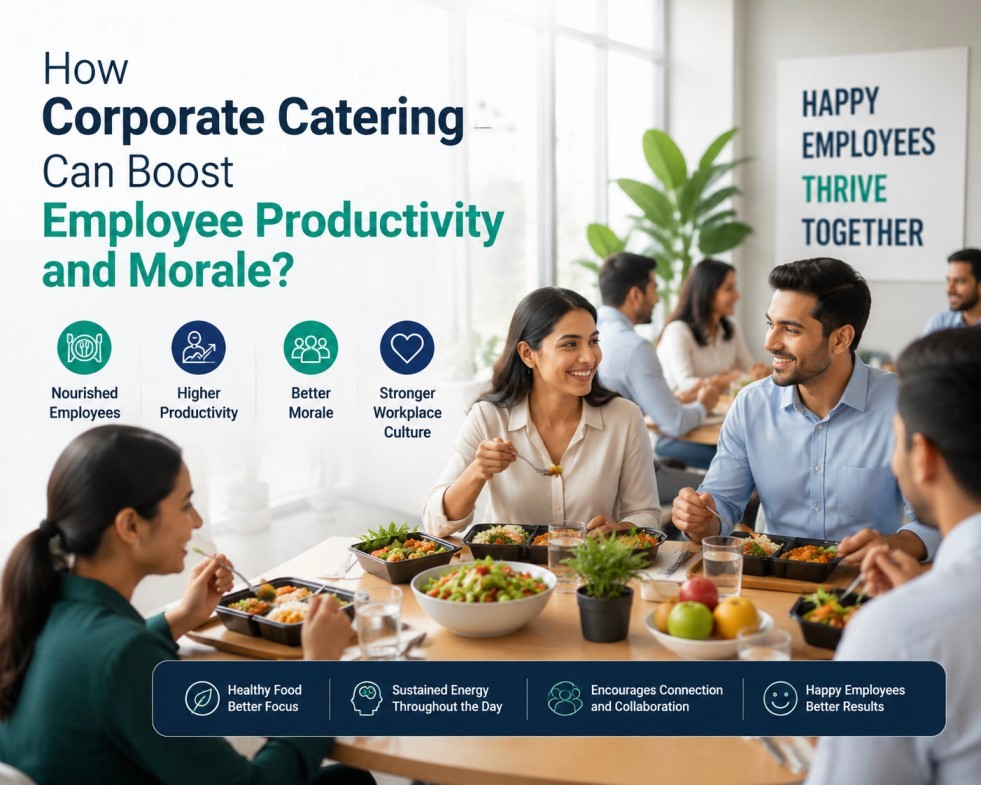
How Corporate Catering Can Boost Employee Productivity and Morale?
The modern workplace is evolving far beyond ergonomic desks and flexible schedules. One of the most impactful—yet frequently overlooked—strategies for driving employee performance is remarkably simple: feeding your…
Posted at
Posted on
Workplace Wellness
The modern workplace is evolving far beyond ergonomic desks and flexible schedules. One of the most impactful—yet frequently overlooked—strategies for driving employee performance is remarkably simple: feeding your people well. Corporate catering has moved from a Silicon Valley luxury to a mainstream business strategy, and the reasons extend well beyond convenience.
The relationship between food, cognitive performance, and workplace morale is now backed by a growing body of scientific research. When employees are well-nourished, they think more clearly, collaborate more effectively, and feel genuinely valued by their employer. When they are not, businesses pay the price in sluggish afternoons, disengaged teams, and revolving-door turnover.
This article explores the tangible, evidence-based ways that a thoughtful corporate catering programme can transform your workplace—from sharper productivity metrics to a more cohesive and motivated team culture.
How Corporate Catering Boosts Employee Productivity?
Increased Energy Levels
The foods your employees eat directly determine their energy trajectory for the rest of the working day. Meals built around lean proteins, complex carbohydrates, and healthy fats release glucose gradually into the bloodstream, providing sustained fuel rather than the sharp spike-and-crash cycle caused by processed foods. A corporate catering programme that prioritises nutritionally balanced menus ensures that employees maintain steady energy levels from lunch through the critical late-afternoon hours—the window where most productivity losses occur.
Time Efficiency
Consider the hidden cost of a typical lunch break without catering: employees spend 10–15 minutes deciding where to eat, 15–20 minutes travelling, another 15–25 minutes waiting for food, and 10–15 minutes returning. That is potentially 45–75 minutes consumed by logistics alone. On-site catering compresses this entire process, giving employees a genuine break to eat, socialise, and recharge rather than spending it stuck in traffic or a queue. Multiply those recovered minutes across your entire team, and the annual productivity gains become substantial.
Better Focus and Concentration
Research published in Neurology by the Framingham Heart Study found that higher omega-3 fatty acid levels were linked to larger hippocampal volumes and better abstract reasoning abilities, even in adults as young as their 40s. A separate systematic review of nine randomised clinical trials confirmed that omega-3 intake improves learning, memory, cognitive well-being, and cerebral blood flow. By incorporating omega-3-rich options like salmon, walnuts, and flaxseed into catered menus, employers can actively support the neurological foundations of sharp thinking.
Reduced Mental Fatigue
The post-lunch productivity dip—often called the “afternoon slump”—is largely a dietary problem, not an inevitable biological one. Heavy meals loaded with refined carbohydrates and saturated fats divert blood flow to the digestive system and trigger insulin responses that leave employees feeling drowsy and unfocused. A well-designed corporate catering menu avoids these traps by featuring lighter, nutrient-dense options that sustain mental clarity. Research has shown that regular breaks combined with proper nutrition can reduce fatigue by up to 30%, making catered lunch breaks a double investment in sustained output.
Customisation for Dietary Needs
A one-size-fits-all menu is a missed opportunity. When employees cannot find food that aligns with their dietary needs—whether vegetarian, vegan, gluten-free, halal, keto, or allergy-specific—they either skip the meal entirely or eat something that leaves them uncomfortable and distracted. Modern corporate catering services offer robust customisation, often through digital ordering platforms where employees can pre-select meals tailored to their preferences. This personalisation ensures that every team member gets the nutrition they need to perform at their best.
Productivity vs. Meal Types: A Comparison
The table below illustrates how different meal choices directly affect energy, cognition, and workplace output:
Meal Type | Energy Impact | Cognitive Effect | Productivity Level |
|---|---|---|---|
Nutrient-Dense Meals (lean proteins, whole grains, vegetables) | Sustained energy for 4–5 hours; stable blood sugar | Enhanced focus, improved memory recall, sharper decision-making | ★★★★★ (High) |
Light Balanced Meals (salads with protein, grain bowls) | Moderate, steady energy; avoids post-lunch slump | Good concentration; reduced mental fatigue | ★★★★ (Above Average) |
Heavy Carb-Loaded Meals (pasta, white rice, fried foods) | Initial spike followed by sharp energy crash | Brain fog within 60–90 minutes; reduced alertness | ★★ (Low) |
Ultra-Processed / Fast Food (burgers, chips, sugary drinks) | Rapid glucose spike and crash; lethargy within an hour | Poor concentration, increased irritability, slower reaction times | ★ (Very Low) |
Skipped Meals (no lunch or only coffee) | Depleted energy reserves; fatigue by mid-afternoon | Difficulty focusing, impaired short-term memory, low motivation | ★ (Very Low) |
Source: Compiled from nutritional science research on glycaemic response, cognitive performance, and workplace productivity studies.
How Corporate Catering Enhances Employee Morale
Fostering a Positive Work Culture
Shared meals are one of the most ancient forms of community building, and they remain just as powerful in a modern office. When employees from different departments sit down together over a catered lunch, organic conversations emerge that would never happen over email or Slack. A Cornell University study spanning 15 months and more than 50 firehouses found a direct correlation between teams that ate together regularly and higher performance ratings from supervisors. The lesson is clear: communal eating builds the trust and informal communication channels that underpin high-performing teams.
Employee Appreciation
A Peapod survey of 1,000 full-time employees found that job satisfaction jumped from 55% to 66% when employers provided free food—an 11-percentage-point leap driven by a single, tangible gesture of care. Catered meals communicate a powerful message: the company recognises that employees’ time and well-being matter. Unlike abstract benefits that employees rarely interact with, a well-prepared lunch is a daily, visible reminder of organisational appreciation.
Boosting Employee Retention
Employee turnover is one of the most expensive hidden costs in business, with replacement costs reaching up to two times an annual salary when accounting for recruitment, onboarding, and lost institutional knowledge. Research from Peapod found that 63% of employees who receive regular free meals plan to stay with their company for at least five years. Separately, data from ezCater indicates that employees are 64% more likely to consider a new employer if free meals are offered—meaning your catering programme is not just retaining current talent but also functioning as a competitive recruiting tool.
Catering to Preferences and Inclusion
In diverse workplaces, food can be either a source of inclusion or exclusion. When a catering programme thoughtfully includes options reflecting the cultural backgrounds and dietary requirements of the entire team—from South Asian vegetarian dishes to Middle Eastern halal options to Western gluten-free alternatives—every employee feels acknowledged. This is not just a nice gesture; it is a tangible expression of a company’s commitment to diversity and inclusion that employees notice and remember.
Creating a Comfortable Environment
The physical act of stepping away from a workstation, sitting in a comfortable space, and enjoying a meal serves as a genuine cognitive reset. Neuroscience research consistently shows that mental breaks improve subsequent problem-solving and creative thinking. By providing not just food but also a welcoming dining space, companies give employees permission to truly disconnect and recharge—a benefit that compounds across every working day.
How Corporate Catering Boosts Employee Morale | |
|---|---|
🤝 Community & Belonging | Shared meals break departmental silos and foster authentic cross-team relationships that strengthen collaboration. |
🏆 Recognition & Appreciation | Providing catered meals signals that leadership values employees’ time and well-being, boosting perceived job worth. |
🌿 Inclusion & Diversity | Offering culturally diverse menus and accommodating dietary needs makes every employee feel seen and respected. |
🧘 Stress Relief & Mental Breaks | A comfortable dining space provides a genuine mental pause, helping employees return refreshed and re-energised. |
🔒 Retention & Loyalty | Companies investing in meal programmes see stronger employee loyalty, reducing costly turnover and recruitment cycles. |
Unique Insights
The Psychological Impact of Food on Productivity
Beyond basic nutrition, food exerts a powerful psychological influence on workplace performance. The concept of “decision fatigue”—the deterioration of decision quality after prolonged decision-making—means that by lunchtime, employees have already depleted significant cognitive resources. Eliminating the need to decide what, where, and how to eat preserves this mental energy for high-value work tasks. Furthermore, specific nutrients play outsized roles in brain function: B-vitamins support neurotransmitter production, iron enables oxygen transport to brain tissue, and antioxidant-rich foods combat oxidative stress that impairs cognitive processing. A catering programme designed with these nutritional principles becomes, in effect, a brain-performance optimisation tool.
Case Studies and Real-World Examples
Google is perhaps the most famous example of a company that leveraged free meals as a strategic workplace tool. When the company reinstated food perks as part of its return-to-office strategy, internal surveys showed a marked increase in employees’ willingness to work on-site. According to ezCater research, 81% of corporate leaders reported that free meals and snacks were the most effective incentive for bringing employees into the office, with seven out of ten employees confirming that free food made them more likely to return. Similarly, McKinsey research found that companies encouraging informal collaboration—including shared meal settings—were 20% more likely to be top performers in their industries. These are not isolated anecdotes; they represent a consistent pattern across industries and company sizes.
The Role of Technology in Corporate Catering
Modern corporate catering has been transformed by technology. Digital menu platforms allow employees to browse options, filter by dietary requirements, and place orders in advance—eliminating waste and ensuring everyone gets what they want. Real-time feedback systems let catering providers continuously refine their offerings based on actual employee preferences rather than guesswork. Some platforms now incorporate nutritional scoring, showing employees the health profile of each meal option and nudging them toward brain-boosting choices. AI-driven demand forecasting reduces food waste by accurately predicting headcounts, while integration with workplace calendars allows catering to be automatically scaled for meeting-heavy days. The result is a catering experience that feels personalised, responsive, and seamlessly integrated into the workday.
External References
Framingham Heart Study (2022), published in Neurology — Found that higher omega-3 fatty acid levels in red blood cells were associated with larger hippocampal volumes and improved abstract reasoning in midlife adults.
Cornell University Commensality Study — A 15-month study across 50+ firehouses demonstrated that teams eating together regularly received significantly higher performance ratings from supervisors, establishing a direct link between shared meals and team effectiveness.
Peapod Workplace Survey of 1,000 full-time employees — Reported that employee job satisfaction rose from 55% to 66% when free food was provided, and 63% of employees receiving regular free meals planned to stay with their employer for five or more years.
Frequently Asked Questions
Q: How does corporate catering improve employee engagement? |
A: Corporate catering creates regular shared experiences that bring colleagues together organically. When employees gather over meals, they form cross-functional relationships, exchange ideas informally, and develop a deeper connection to workplace culture. This social engagement directly translates into stronger emotional investment in their work and the organisation. |
Q: What types of meals should be included to boost productivity? |
A: Prioritise meals rich in lean proteins, whole grains, healthy fats (especially omega-3 sources like salmon and walnuts), and plenty of vegetables and fruits. Avoid heavy, carb-laden options that cause post-lunch energy crashes. Rotating menus that include seasonal produce and varied cuisines keep employees interested and nutritionally balanced. |
Q: Can corporate catering be customised to meet employee dietary needs? |
A: Absolutely. Modern corporate catering services offer extensive customisation—vegetarian, vegan, gluten-free, halal, kosher, keto, and allergy-specific options are standard with reputable providers. Many now use digital ordering platforms where employees can pre-select meals based on their specific dietary profiles, ensuring every team member is included. |
Q: Is corporate catering cost-effective for small businesses? |
A: Yes, and often more than expected. Small businesses can start with weekly catered lunches rather than daily programmes, negotiate bulk rates with local caterers, or use subscription-based catering platforms. When factoring in reduced turnover costs, fewer sick days, improved productivity, and the time employees save by not leaving for lunch, the return on investment is substantial even for teams of 15–25 people. |
Corporate catering is not an expense—it is an investment in your most valuable asset: your people. From sharper cognitive performance and recovered productive hours to stronger team bonds and lower turnover, the returns are measurable and meaningful. The organisations that recognise this today will be the ones attracting and retaining tomorrow’s best talent.


