Blog
/
Workplace Wellness
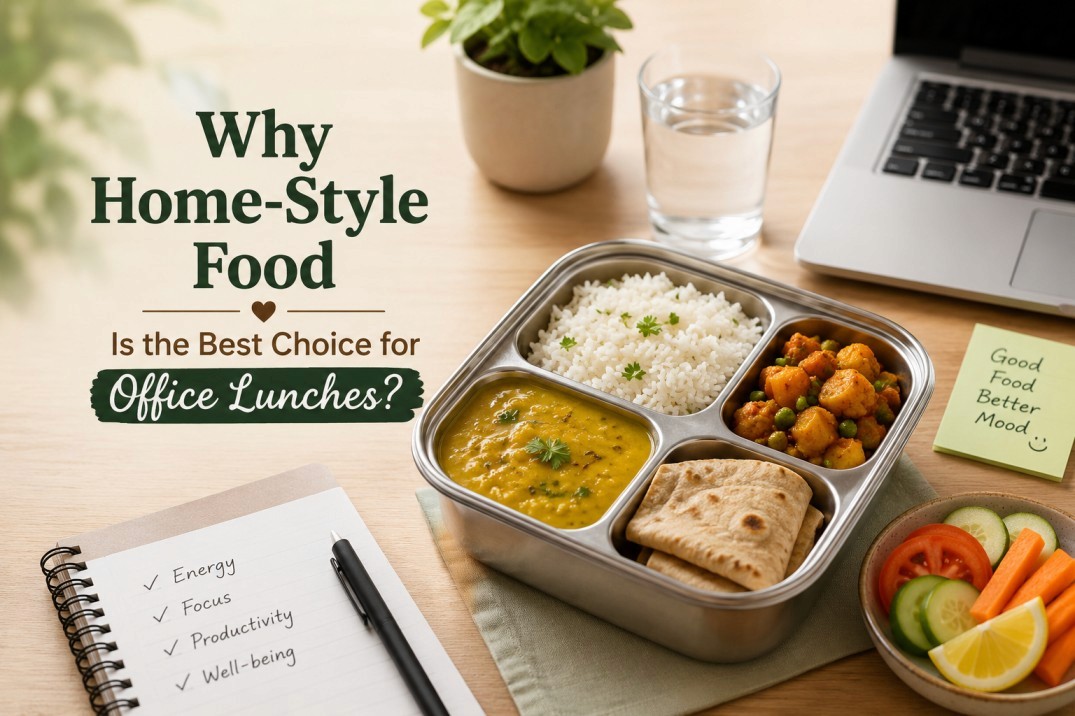
Why Home-Style Food Is the Best Choice for Office Lunches?
Introduction The office lunch hour is far more than a break from spreadsheets and meetings. It is a daily touchpoint that shapes employee energy levels, cognitive performance, and long-term loyalty.
Posted at
Posted on
Workplace Wellness
Introduction
The office lunch hour is far more than a break from spreadsheets and meetings. It is a daily touchpoint that shapes employee energy levels, cognitive performance, and long-term loyalty. Yet many organisations still default to pre-packaged sandwich platters, greasy fast-food trays, or vending-machine fare that leaves teams sluggish by mid-afternoon. There is a better way.
Home-style food – meals prepared with the same care, fresh ingredients, and balanced nutrition you would find at a family dinner table – is emerging as the gold standard for corporate lunches. Whether sourced from local home chefs, family-run catering businesses, or purpose-built corporate kitchens, home-style meals bring warmth, nutrition, and variety to the workplace. This blog explores why making this switch can transform your office culture from the inside out.
Why Home-Style Food Is the Best Choice for Office Lunches
1. Healthier Options
Fast food and processed meals tend to be high in sodium, saturated fats, and refined sugars. Home-style cooking, by contrast, relies on whole grains, fresh vegetables, lean proteins, and traditional spice blends that add flavour without empty calories. Employees who eat balanced, nutrient-rich lunches experience steadier blood-sugar levels, fewer energy crashes, and better concentration throughout the afternoon. Over weeks and months, this translates into measurably lower absenteeism and healthcare costs.
2. Customisation to Dietary Needs
Modern workplaces are diverse, and so are dietary requirements. Home-style catering is inherently flexible: a dal-rice combination is naturally vegan, a grilled chicken salad is low-carb, and a gluten-free roti can replace wheat-based bread without altering the meal’s character. Because home-style menus are built from individual ingredients rather than frozen assemblies, swapping or substituting components is straightforward – giving every team member a meal that suits their body and beliefs.
3. Cost-Effective for Employees
Dining out every day in a metro like Delhi NCR can easily cost ₹300–500 per meal. Subsidised home-style lunch programmes typically bring that figure down to ₹100–200 per serving, because bulk purchasing and efficient kitchen operations reduce per-plate costs. Companies that partially or fully fund these programmes report that employees perceive the benefit as far more valuable than its actual expense – a rare win-win in corporate budgeting.
4. Improved Employee Satisfaction
When an organisation provides meals that feel lovingly prepared rather than mass-produced, employees interpret it as genuine care for their well-being. Surveys by the Society for Human Resource Management (SHRM) consistently rank free or subsidised meals among the top non-monetary benefits that influence job satisfaction. The message is subtle but powerful: “We value you enough to feed you well.”
5. Boosts Team Morale
Sharing a home-cooked-style meal triggers the same social bonding mechanisms as a family dinner. Colleagues who eat together exchange ideas, resolve minor conflicts informally, and develop trust that accelerates project collaboration. The communal nature of home-style food – a shared dal, a common salad bowl – encourages a collective spirit that individually plated fast food simply cannot replicate.
6. Fosters Healthy Work-Life Balance
Many employees skip breakfast or rely on junk food because mornings are consumed by commutes. A nutritious home-style lunch at work compensates for that gap, ensuring at least one wholesome meal per day. It also removes the mental load of deciding “what to eat” and the time spent queuing at restaurants or waiting for deliveries – freeing the lunch hour for actual rest and recharge.
7. Consistency and Reliability
Restaurant quality fluctuates with chef availability, supply chains, and rush-hour pressure. Home-style catering, built on tested family recipes and standardised processes, delivers remarkably consistent taste and portion sizes. Employees know what to expect, and that predictability itself reduces daily decision fatigue and lunchtime anxiety.
8. Sustainability
Home-style meals typically generate less packaging waste than individually wrapped fast-food orders or pre-packaged platters. Caterers who prepare food in bulk kitchens use reusable containers, buy seasonal produce, and create less food waste through accurate headcount-based cooking. For organisations pursuing ESG goals, a home-style lunch programme is a tangible, visible step toward a smaller environmental footprint.
9. Support for Local Businesses
Choosing home-style catering often means partnering with local home chefs, family-run tiffin services, or small catering enterprises. This channels corporate food budgets directly into the neighbourhood economy, supports micro-entrepreneurs (many of whom are women), and builds a supplier relationship rooted in community rather than impersonal procurement.
10. Cultural Comfort
India’s workforce spans dozens of regional cuisines. A thoughtful home-style menu can rotate between South Indian rasam-rice, Punjabi rajma-chawal, Bengali fish curry, and Gujarati thepla – making every employee feel culturally seen. This inclusivity strengthens belonging and reduces the sense of alienation that sometimes accompanies relocation to a new city for work.
Unique Insights
The Psychological Impact of Comfort Food
Research published in the journal Psychological Science found that comfort food activates neural pathways associated with social connection and emotional safety. When employees eat meals reminiscent of home cooking, cortisol levels dip and serotonin production increases. The result is a calmer, more focused workforce that handles afternoon deadlines with greater resilience.
The Growing Popularity of Homemade Meals in Workplaces
Companies such as Zomato, Infosys, and several co-working spaces across Bengaluru and Gurgaon have begun partnering with local home-chef networks for daily employee meals. The trend is driven by employee demand: a 2024 survey by Great Place to Work India indicated that 68% of respondents preferred fresh, home-style meals over branded restaurant food when offered as a workplace perk. The shift signals that corporate catering is moving from “convenient” to “conscious.”
How Home-Style Food Creates a Family-Like Environment
Anthropologist Robin Dunbar’s research on communal eating suggests that sharing food is one of the oldest human bonding rituals. When an office lunch feels like a family meal – served in shared dishes, featuring recipes passed down through generations – it activates a sense of kinship. New hires integrate faster, cross-departmental silos weaken, and the workplace begins to feel less like a transactional space and more like a community.
Benefits Comparison: Home-Style vs. Other Office Lunch Options
The following table provides a side-by-side comparison of four common office lunch formats across the dimensions that matter most to employees and employers alike.
Criterion | Home-Style Food | Fast Food | Catered Buffet | Pre-Packaged |
Nutritional Value | High – fresh, balanced | Low – high fat/sodium | Medium – varies | Low – preservatives |
Customisation | Excellent – flexible menus | Poor – fixed menu | Moderate | Very poor |
Cost per Meal | ₹100–200 | ₹200–400 | ₹250–500 | ₹150–300 |
Employee Satisfaction | Very high | Low–medium | Medium–high | Low |
Sustainability | High – low waste | Low – heavy packaging | Medium | Low – plastic wrap |
Cultural Relevance | Excellent | Poor | Moderate | Poor |
Consistency | High | Variable | Variable | Consistent but bland |
Top 5 Benefits of Home-Style Office Lunches
A quick-reference summary of the most compelling reasons to make the switch:
Healthier, Happier Teams Fresh ingredients and balanced meals reduce lifestyle-disease risk and afternoon fatigue. |
Budget-Friendly for All Bulk preparation drives per-plate costs well below restaurant prices. |
Inclusive Menus Easy adaptation to vegan, gluten-free, Jain, halal, and other dietary needs. |
Stronger Team Bonds Communal, family-style eating fosters trust and cross-team collaboration. |
Sustainability Gains Less packaging, less waste, and support for local producers and home chefs. |
External References
Society for Human Resource Management (SHRM) – “Employee Benefits Survey” reports consistently rank subsidised meals among the most valued non-cash perks. shrm.org
Harvard Business Review – Research on workplace nutrition demonstrates a direct link between meal quality and afternoon cognitive performance. hbr.org
Psychological Science (APS) – Studies on comfort food confirm its role in reducing stress and activating social-connection pathways in the brain. psychologicalscience.org
Frequently Asked Questions
Q: What makes home-style food healthier for office lunches?
Home-style meals are prepared from scratch using fresh, whole ingredients with minimal processing. Unlike fast food, they avoid excessive sodium, trans fats, and artificial preservatives. Cooks can control oil quantities, choose high-fibre grains, and include generous portions of vegetables – resulting in meals that sustain energy without the post-lunch slump.
Q: How can home-style food be adapted to cater to diverse dietary needs?
Because home-style cooking starts from raw ingredients, it is straightforward to prepare parallel versions of the same meal – for example, a dairy-free paneer substitute, a low-sodium variant, or a Jain-friendly preparation without onion and garlic. Menu planners can rotate cuisines weekly to cover a broad dietary and cultural spectrum.
Q: Can offering home-style food increase employee retention?
Evidence strongly suggests yes. Workplace wellness programmes that include quality meals report higher engagement scores and lower turnover. Employees who feel their physical well-being is prioritised are significantly more likely to stay, especially in competitive talent markets like Delhi NCR’s technology and services sectors.
Q: How can companies integrate home-style food into their corporate catering plans?
Start with a pilot: partner with a reputable home-style catering provider for a two-week trial, collect employee feedback via anonymous surveys, and measure uptake. Scale gradually by rotating menus, introducing regional cuisine days, and negotiating volume-based pricing. Many providers, including specialists like Promach, offer end-to-end corporate catering packages that handle everything from menu planning to delivery logistics.
Conclusion
Home-style food in the office is not a nostalgic luxury – it is a strategic investment. It improves health outcomes, strengthens team dynamics, supports local economies, and sends a clear message of care to every employee who sits down to eat. In a world where talent retention hinges on culture as much as compensation, the lunch table may be the most underrated tool in your HR arsenal. Make it count.


