Blog
/
Industry Insights
Top Benefits of Onsite Cafeteria Services for Corporates
The corporate office has evolved far beyond cubicles and conference rooms. Today’s most sought-after workplaces are ecosystems designed around employee experience—and at the heart of that ecosystem is food.
Posted at
Posted on
Industry Insights
The corporate office has evolved far beyond cubicles and conference rooms. Today’s most sought-after workplaces are ecosystems designed around employee experience—and at the heart of that ecosystem is food. Onsite cafeteria services have shifted from a “nice to have” amenity to a strategic investment that directly influences talent acquisition, daily productivity, and long-term retention.
Companies across India and globally are recognising that when employees eat well, they think better, collaborate more, and stay longer. A well-run cafeteria does not merely fill stomachs—it shapes culture, signals care, and quietly drives the bottom line. Whether you are a 200-person tech firm in Noida or a 5,000-employee conglomerate in Gurgaon, the case for onsite dining has never been stronger.
This guide breaks down the ten most impactful benefits, offers practical implementation advice you will not find in generic listicles, and provides comparison frameworks to help you make informed decisions.
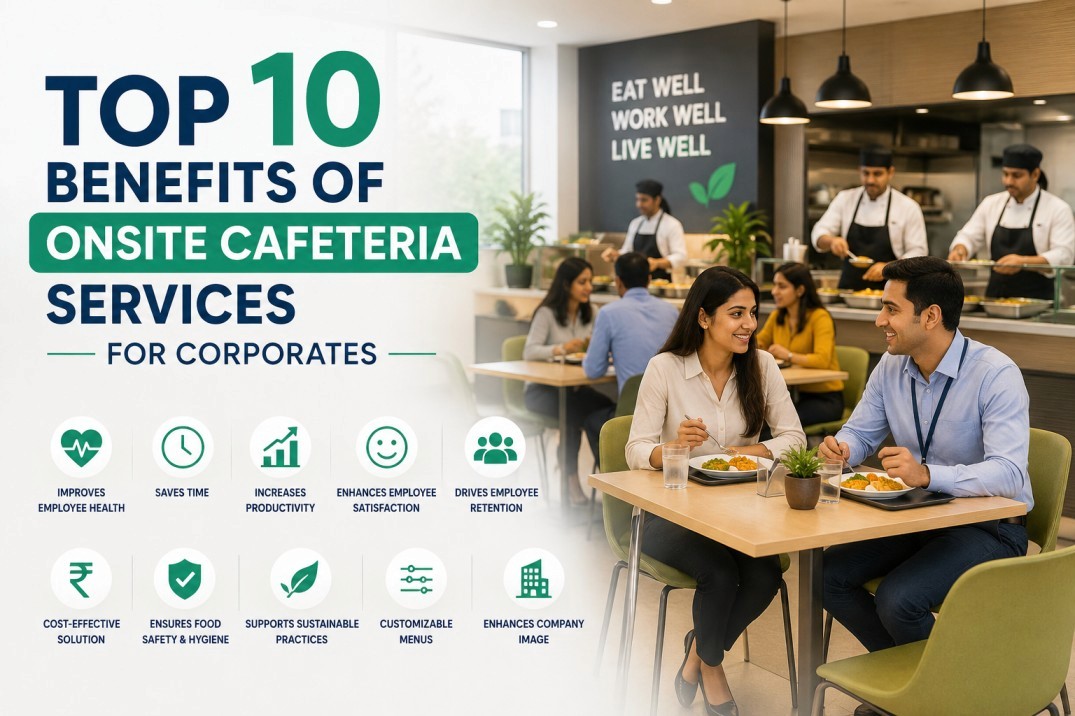
Top 10 Benefits of Onsite Cafeteria Services
1. Improved Employee Health and Well-being
When employees rely on fast food joints or vending machines, their nutrition suffers—and so does their health. An onsite cafeteria gives companies direct influence over the quality, balance, and freshness of meals offered daily. By working with nutritionists to design menus rich in whole grains, lean proteins, seasonal vegetables, and low-sugar options, organisations can meaningfully reduce lifestyle-related ailments such as obesity, hypertension, and diabetes among their workforce. Beyond physical health, access to wholesome food has a measurable impact on mental well-being. A 2022 study published in the British Journal of Nutrition found that employees who ate balanced meals during work hours reported 26% fewer symptoms of anxiety and depression compared to those who skipped meals or relied on processed snacks. Providing a dedicated dining space also eliminates the stress of finding suitable meals outside, which is particularly valuable for employees managing dietary conditions such as celiac disease, lactose intolerance, or specific religious dietary laws.
2. Enhanced Employee Productivity
The relationship between nutrition and cognitive performance is well-documented. After a carbohydrate-heavy, nutrient-poor lunch, energy levels crash—commonly referred to as the “post-lunch dip.” Onsite cafeterias that emphasise balanced meals help employees sustain steady glucose levels throughout the afternoon, translating directly into sharper focus, quicker decision-making, and higher creative output. There is also a less obvious productivity benefit: time savings. Industry data suggests the average employee spends 35–45 minutes leaving the building, ordering, waiting for, and returning with lunch. Multiply that across a 500-person office and you’re looking at roughly 375 hours of lost productive time every single day. An onsite cafeteria can reclaim a significant portion of that time, giving employees a full break while keeping them close to their workspace.
3. Cost Efficiency for Employees
Dining out in major metros can cost employees anywhere from ₹250 to ₹600 per meal. When an employer subsidises onsite meals, that daily expense can shrink to ₹50–₹150 per meal—a saving that adds up to tens of thousands of rupees annually for each team member. This financial relief is especially meaningful for junior staff and mid-level employees, making it a powerful retention lever that does not require a salary increase. Companies that negotiate bulk purchasing agreements with suppliers and pass the savings along create a genuine sense of being looked after. That emotional ROI is often more impactful than a modest pay bump.
4. Convenience and Time-Saving
Beyond cost, convenience is one of the most appreciated perks of onsite dining. Employees no longer need to battle traffic, stand in queues at crowded restaurants, or worry about inconsistent food quality from delivery apps. The cafeteria is steps away, the menu is predictable, and the wait times are minimal. This is particularly valuable during high-pressure project phases or tight deadlines when stepping out for 45 minutes is simply not feasible. A well-run cafeteria also extends convenience beyond lunch—think early-morning breakfast options for employees who commute long distances, mid-afternoon snack counters, and even packaged take-home dinner kits that reduce the burden of cooking after a full workday.
5. Promotes Social Interaction and Team Building
The cafeteria is the modern corporate campfire. It is one of the few spaces where a junior developer might sit across from a vice president, where cross-departmental conversations happen organically, and where relationships form outside the rigid structure of meetings and email threads. Research from MIT’s Human Dynamics Laboratory found that teams whose members ate together had 36% higher performance in collaborative tasks. Companies can amplify this effect by designing communal dining areas with mixed seating rather than department-segregated zones, introducing themed lunch events (e.g., “Friday Fusion” or “Regional Cuisine Wednesday”), and encouraging managers to eat alongside their teams rather than in private dining rooms.
6. Customisation and Employee Satisfaction
A one-size-fits-all menu breeds monotony, and monotony breeds dissatisfaction. Forward-thinking cafeterias operate more like a curated food hall, offering multiple live counters—a salad and grain bowl station, a hot entree counter, a South Indian tiffin bar, a build-your-own wrap section, and a rotating chef’s special. Digital feedback kiosks allow employees to rate dishes in real time, enabling the catering team to iterate menus weekly rather than monthly. Personalisation can go deeper: calorie-counted “fitness meals” for health-conscious employees, high-protein options for those who train, and gentler, easy-to-digest meals for employees recovering from illness. This level of thoughtfulness turns the cafeteria from a mere convenience into a tangible expression of corporate care.
7. Cultural Diversity and Inclusion
A diverse workforce deserves a diverse menu. When an onsite cafeteria serves Jain meals alongside Korean bibimbap, halal options next to vegan bowls, and gluten-free pasta beside traditional rajma-chawal, it sends a powerful message: everyone here belongs. Food is one of the most visceral expressions of cultural identity, and respecting it on the plate signals respect at the organisational level. Companies can take this further by hosting “Culture on a Plate” weeks where employees from different backgrounds share recipes and stories behind their cuisine. This turns the cafeteria into an engine of cultural education, not just a feeding station.
8. Better Work-Life Balance
Meal planning, grocery shopping, and cooking consume a significant chunk of personal time—time that many professionals would rather spend exercising, pursuing hobbies, or being present with family. When the workplace handles two out of three daily meals (breakfast and lunch), employees regain hours of weekly bandwidth. Some progressive companies have extended this further by offering take-home dinner services: vacuum-sealed, chef-prepared meals that employees can pick up on their way out. This simple addition can reduce the mental load of the daily “what’s for dinner?” question, which, studies show, is one of the most common micro-stressors in adult life.
9. Sustainability and Environmental Impact
Individual food delivery generates an enormous amount of single-use packaging. A single office of 200 employees ordering from delivery apps can produce over 50,000 plastic containers, cutlery sets, and polythene bags per year. An onsite cafeteria eliminates most of this waste by using reusable crockery, bulk cooking, and centralised procurement. Beyond packaging, cafeterias enable smarter food waste management. By tracking consumption patterns, kitchens can adjust portions and preparation volumes, reducing the roughly 30% food waste that is typical in unmanaged corporate dining. Composting programmes, tie-ups with food rescue organisations, and the use of locally sourced, seasonal produce further shrink the environmental footprint.
10. Boosts Company Reputation
In a talent market where candidates compare perks as closely as compensation, an onsite cafeteria has become a differentiator. Glassdoor reviews frequently cite food quality as a factor in workplace satisfaction, and campus tour experiences during the interview process often include a cafeteria walk-through. Companies like Google, Infosys, and TCS have made their dining facilities a visible part of their employer brand, featuring them in recruitment videos and social media posts. For client-facing organisations, a well-appointed cafeteria also elevates the impression made during client visits and partner meetings. It signals operational maturity, employee investment, and a culture of quality—attributes that build trust and credibility.
Unique Tips for Implementing Onsite Cafeteria Services
Designing a Functional Cafeteria
Layout matters more than aesthetics. Prioritise traffic flow to avoid bottlenecks during peak hours: a single-direction queue that flows from ordering to collection to seating prevents congestion. Allocate at least 10–12 square feet per seated employee and maintain a 60:40 ratio between communal tables and smaller four-seater clusters to balance group dining with quiet solo meals. Natural light, indoor plants, and acoustic panelling make the space inviting without requiring a luxury budget.
Partnering with Local Vendors
Rather than relying solely on a single large caterer, consider a vendor-consortium model. Partner with two or three specialised local food providers—one for South Indian cuisine, one for North Indian and Continental, and one for health-focused meals—rotating them across weekdays. This keeps the menu fresh, supports local businesses, and creates healthy competition that drives quality upward. Engage a consulting nutritionist to audit menus quarterly for calorie balance, allergen transparency, and seasonal variety.
Technology Integration
Deploy a simple cafeteria management app that allows employees to pre-order meals by 10 AM, view daily menus and calorie information, rate dishes, and pay digitally. Pre-ordering data gives the kitchen accurate demand forecasts, reducing overproduction and waste. QR-code-based feedback systems at tables provide real-time satisfaction data. For larger campuses, digital display boards showing live wait times at each counter can distribute foot traffic more evenly.
Benefits Comparison Table
The table below compares onsite cafeteria services against common alternatives across seven critical dimensions.
Criteria | Onsite Cafeteria | External Catering | Employee Kitchen | Nearby Restaurants |
Cost per Meal | ₹50–₹150 | ₹120–₹250 | ₹30–₹80 (self) | ₹250–₹600 |
Convenience | Very High | Moderate | Low | Low–Moderate |
Nutritional Control | High | Moderate | Varies | Low |
Time Required | 10–15 min | 20–30 min | 30–45 min | 40–60 min |
Menu Variety | High (daily rotation) | Fixed weekly menu | Employee-dependent | High but inconsistent |
Waste Management | Centralised | External vendor | Unmanaged | High single-use |
Social Interaction | Very High | Low | Moderate | Low |
Frequently Asked Questions
Q: What are the typical costs of setting up an onsite cafeteria for a corporate office?
A: Setup costs vary widely based on scale and finish level. For a mid-sized office (200–500 employees), a basic cafeteria with modular kitchen equipment, ventilation, plumbing, and seating typically ranges from ₹15–40 lakh. Premium setups with multiple live counters, digital ordering kiosks, and designer interiors can run ₹60 lakh to ₹1.5 crore. Ongoing operational costs—staffing, raw materials, utilities—generally fall between ₹80–₹150 per meal per employee when managed through a professional catering partner.
Q: How do you determine the right meal options for a corporate cafeteria?
A: Start with an anonymous employee survey covering dietary preferences, allergies, religious restrictions, and cuisine interests. Analyse the demographics: a workforce with a high proportion of South Indian employees may want idli-dosa counters; a team with many fitness enthusiasts may value protein-rich options. Review the data monthly and rotate menus on a four-week cycle to prevent fatigue. A consulting nutritionist can audit calorie balance and micronutrient diversity quarterly.
Q: Can onsite cafeterias help with employee retention?
A: Yes. According to SHRM’s 2023 Employee Benefits Survey, subsidised meals rank among the top five non-salary perks influencing an employee’s decision to stay with a company. When meals are good, affordable, and convenient, employees develop a daily comfort with the workplace that is difficult for competitors to replicate. Exit interview data consistently shows that “small daily conveniences”—of which food is the most cited—play a larger role in retention than occasional bonuses.
Q: What are the most common challenges faced when managing an onsite cafeteria?
A: The four most frequent challenges are: (1) Menu monotony—solved by rotating vendors and introducing weekly specials. (2) Peak-hour congestion—addressed through staggered lunch slots and pre-ordering systems. (3) Food waste—mitigated by demand forecasting based on pre-order data and historical consumption trends. (4) Hygiene compliance—managed through FSSAI-certified kitchen operations, regular third-party audits, and transparent kitchen-cam feeds accessible to employees.
Final Thoughts
An onsite cafeteria is not just a dining facility—it is a strategic tool that touches health, productivity, culture, sustainability, and employer brand in one integrated investment. The companies that get corporate dining right do not treat it as a cost centre; they treat it as a culture centre. If you are evaluating onsite cafeteria services for your organisation, focus less on the per-meal cost and more on the per-employee impact. The returns, both tangible and intangible, will speak for themselves.
Contact Promach for cafeteria services or any corporate catering services.


